
By Erika Atienza
I’m not a runner, and I’m not a hiker
I’m fairly active. I like long walks, but I don’t run, and I don’t hike. So, when I booked gorilla tracking in Uganda, the word that worried me was “tracking”. It sounds like something other people do: people with proper boots, a training plan, and a trail history.
I did it in April, in Bwindi, in the Rushaga sector, and it was easier than I expected. Being a hiker isn’t a prerequisite. I’d say the same to friends who aren’t physically active at all, as long as they can walk and are happy to go slowly. It really isn’t as tedious as it sounds.
What I was afraid of
I was nervous at the start. There is an expectation around the word hiking, and my first thought was: what if I can’t keep up with the group? Would it be embarrassing? Would I be the one everybody waits for?
That wasn’t an issue at all. On the trek I joined, one of the groups was an older woman who looked fit for her age, but not in any way too fit. Everyone adjusted to the pace, and there was no pressure. Everyone was slow, and I never felt I was holding anyone up.
That is the thing I would most like a first-timer to hear. The group isn’t a race. The rangers are walking with a family of visitors, not testing anyone, and the pace is set by the people in it.
The one thing that went wrong: my shoes
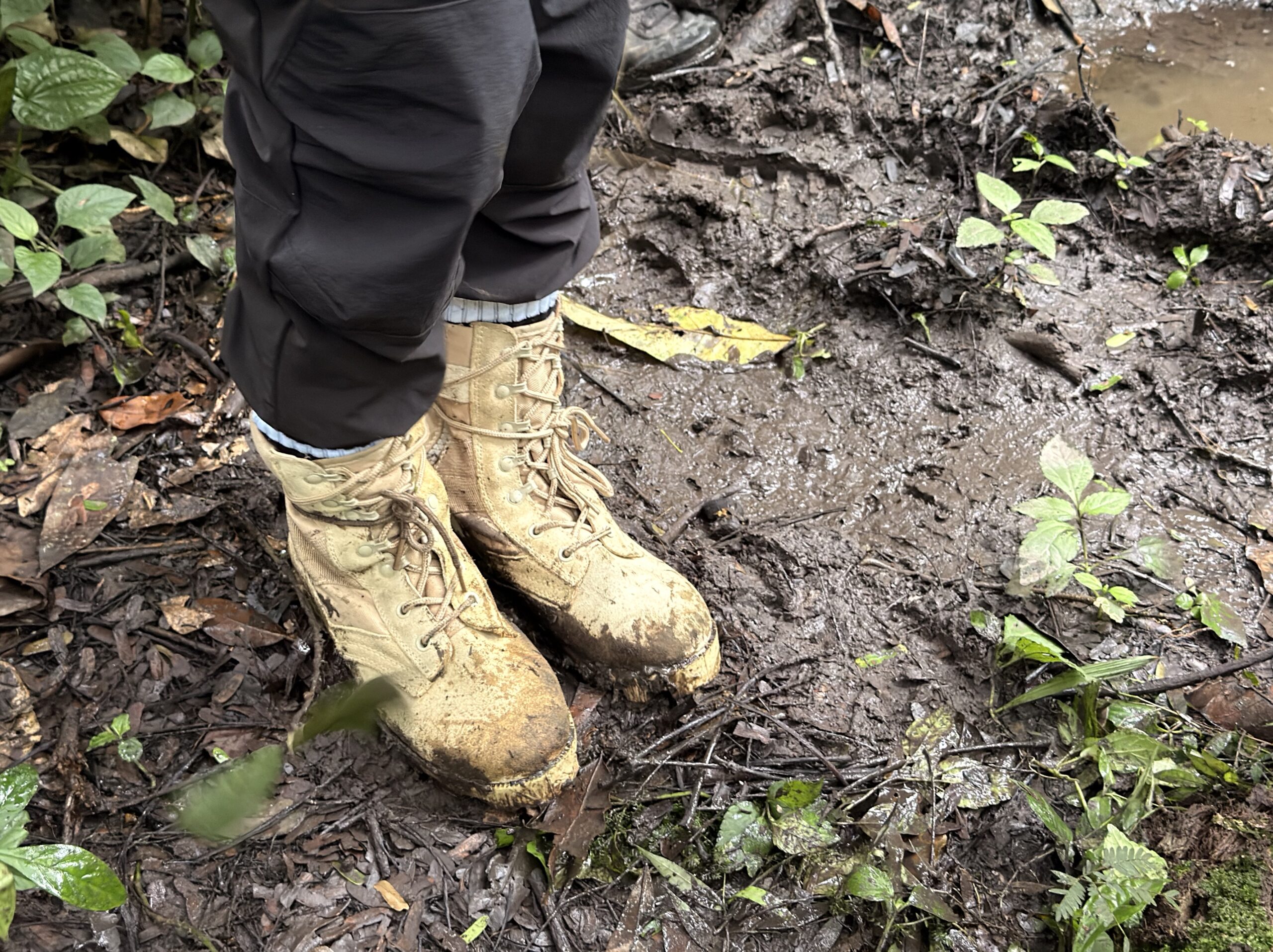
I didn’t do anything to prepare, and the only real problem I had was my footwear. I looked for hiking shoes in Arusha, where I was before Uganda, but they didn’t have the pair I liked in my size. So, I made do with a soldier-style boot that was heavy and too big for me, a bit like wearing two pairs of socks.
That was the most difficult part of the whole trip. It wasn’t really an injury, more the strain you feel after walking a long way in the wrong shoe. It was nothing major, but it was avoidable. What I should have worn was my normal hiking shoes, with good grip and some ankle support. With the right shoes, I don’t think the trek is an issue.
If you take one thing from this article, take this: sort out your shoes before you leave home. Break them in, make sure they fit, and don’t count on finding a replacement along the way. Shops in the cities you pass through may not have your size, and the day before a trek is a bad time to find out.
What I packed, and what I’d skip
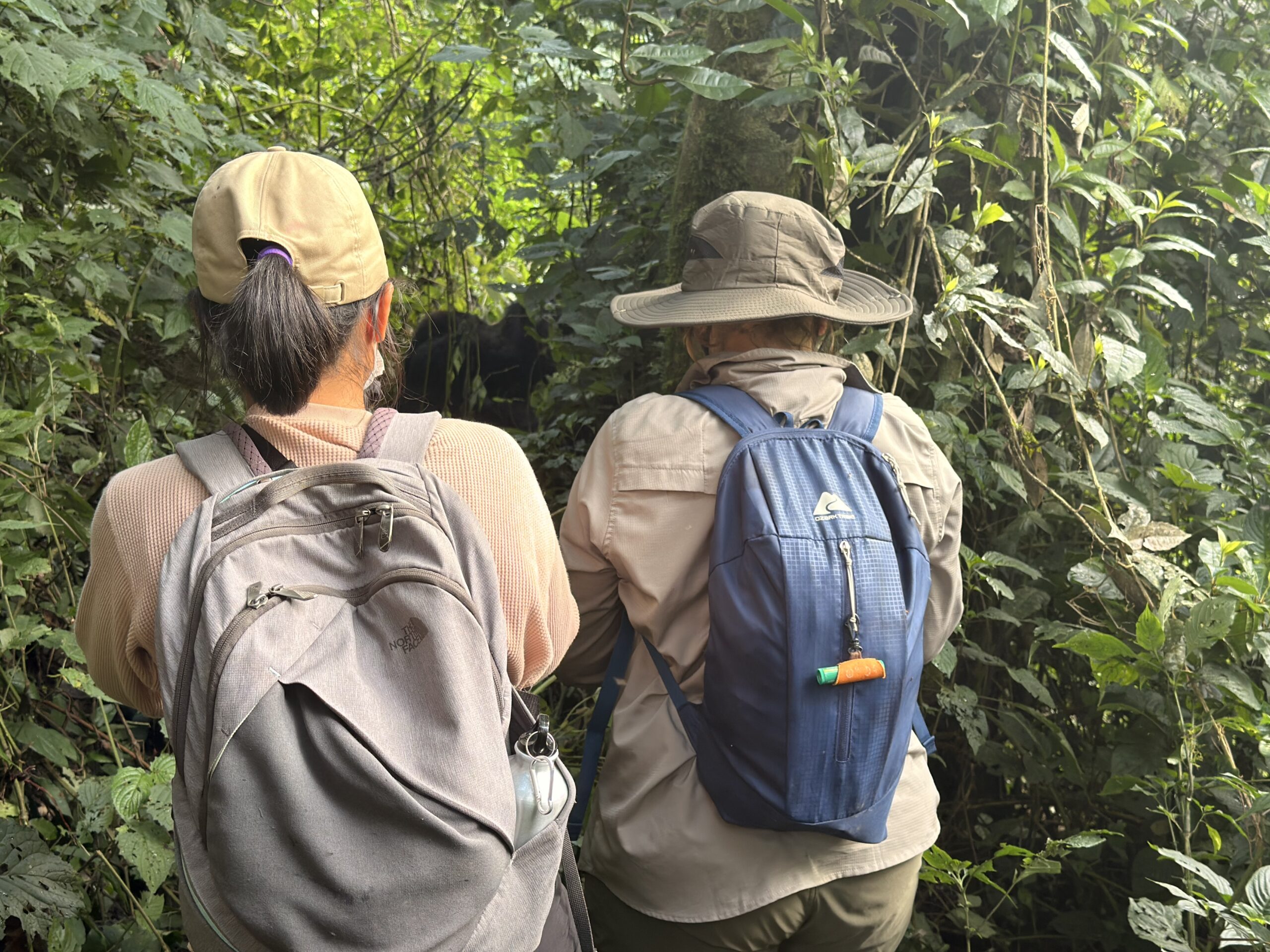
I took water and snacks, plus a lot of just-in-case items like wet wipes. Looking back, I would take water and not much else, unless you hire a porter, in which case you don’t have to carry much anyway.
I did bring gloves, and I’m glad I did. In the forest, you want to be able to hold onto branches without worrying what they are, and gloves help against blisters and bruises. I’d also wear proper cargo-style trousers that let you move and keep your legs covered.
I also wore gaiters, which were provided for me at no cost. They are the kind of thing you don’t think you need until something bites you or scratches you, and by then it is too late. If I had known, I would have brought a pair from home. I believe you can rent them at the lodge, but I am not sure, so ask when you book.
The best small thing I brought was a pair of sandals. As soon as the trek was over, I changed into them, and it helped a lot. After hours in muddy shoes, putting comfortable footwear on for the drive back felt like a reward.
The briefing and the porter
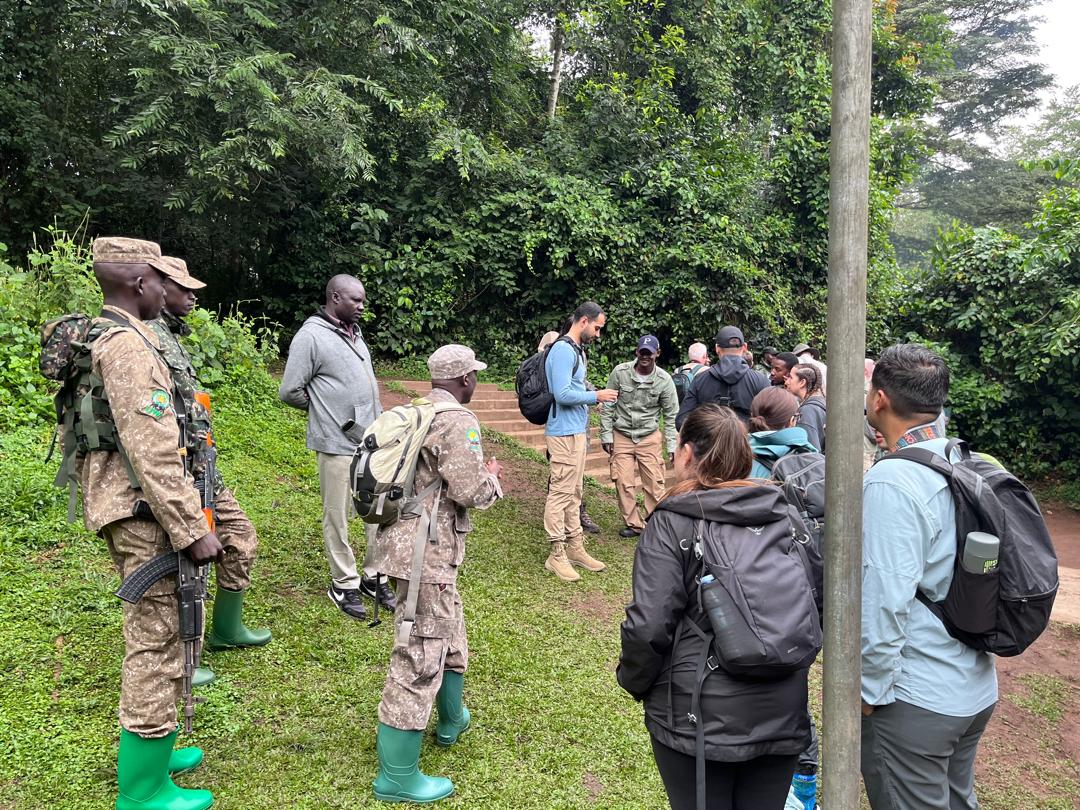
We started early. After breakfast at the hotel, we were at the briefing at around 8:00 AM. It was nothing special. We were told the usual things: wear a mask when you are with the gorillas and keep your distance. Nothing in particular stayed with me, because it all felt sensible.
We did hire a porter. I didn’t think it was strictly necessary, but one of us had a big camera, and it is a good way to support the local people, so we were happy to do it. The porter cost $20 USD.
The walk
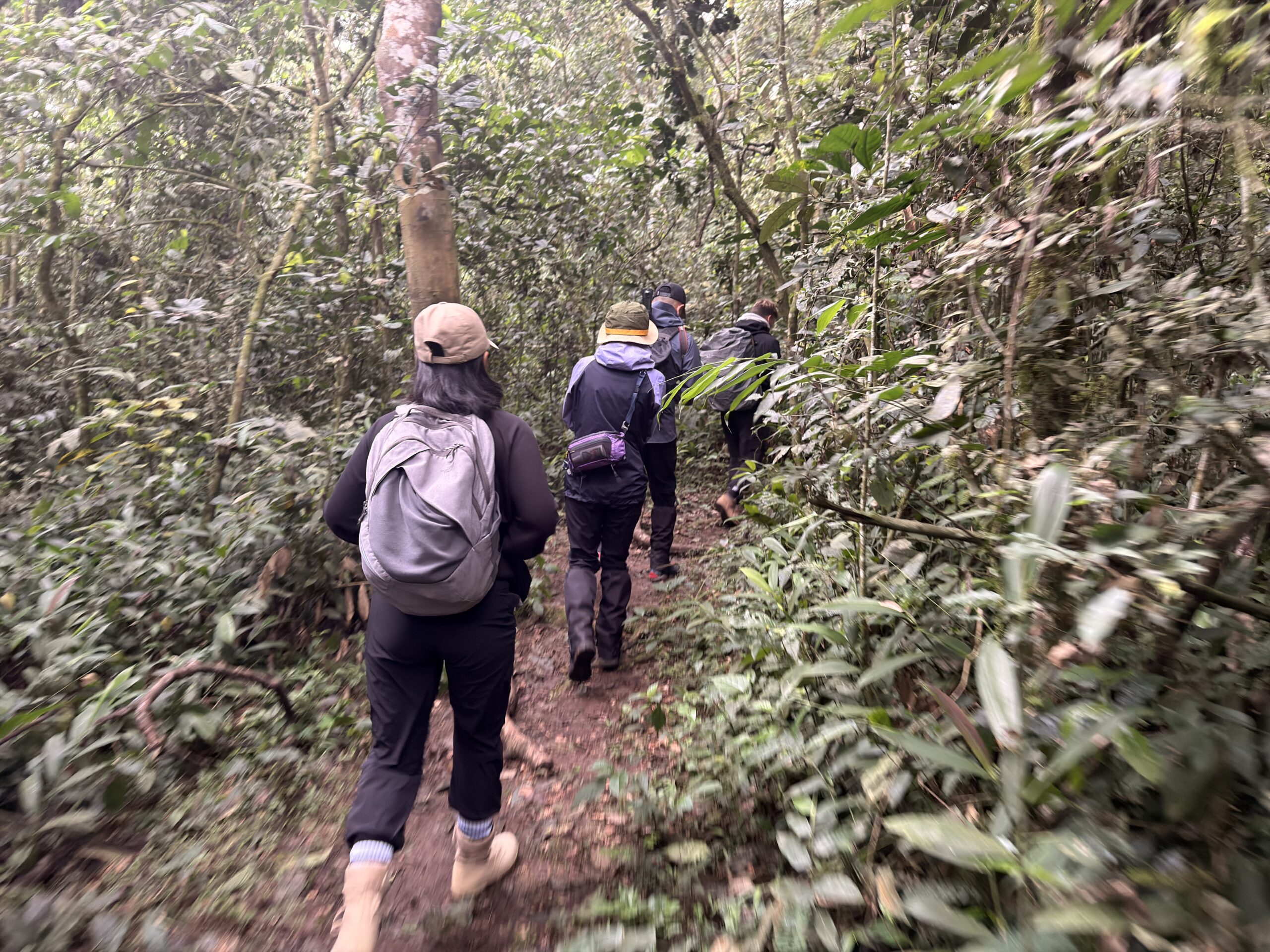
The walk was relaxed. The ground went up and down, but it wasn’t steep. The rangers walking ahead of us had to cut a way through with a big knife, which is why I’d suggest covering up well to avoid scratches. I could imagine it being a bit more challenging when it’s wet.
The weather was fine on the day. It had rained during the night, I think, so the ground was muddy, but a normal kind of muddy and nothing annoying.
We found the gorillas after about 30 minutes, and you go back the same way, so the walk out was about the same. Everyone then gets one hour with them. A woman I trekked with had gone the day before, and it took her four hours that day. She told me it was a nice experience because after all that walking, you then see them, and that made it feel fulfilling. So, the length varies a lot from day to day, and it is worth being ready for either.
If you need to stop, you can slow down, pause, or take a break. Nobody minded.
We were finished before lunch, and we had lunch back at the hotel. So, the trek doesn’t take the whole day, at least on a day like mine, though you should keep the afternoon free in case it runs long.
Meeting the gorillas
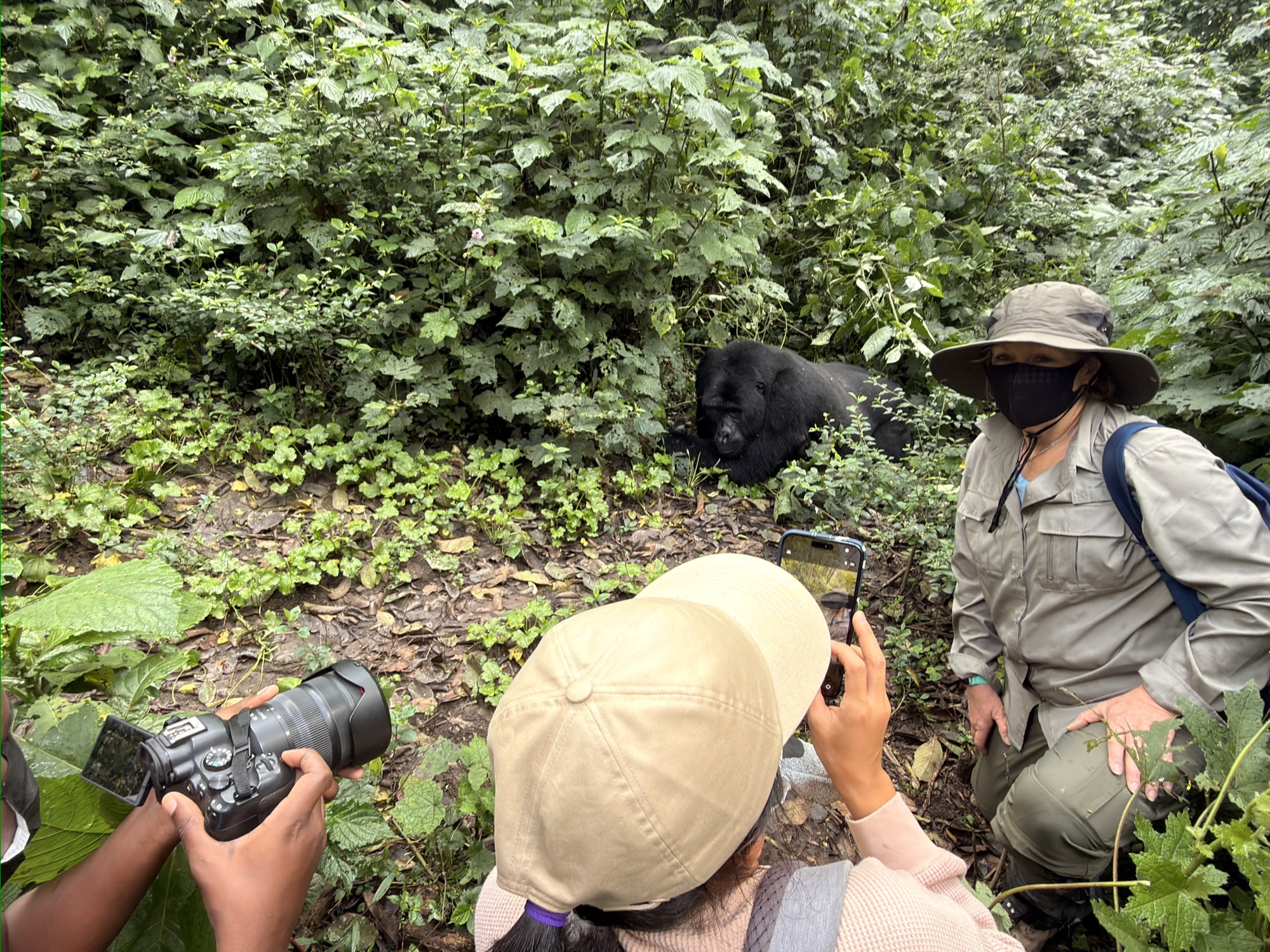
It was surreal. You’ve seen gorillas in photos so many times, and then you are looking at them for real. They were fairly close.
What I don’t want to forget is one gorilla who was making a sound. He seemed angry or unhappy that we were nearby, though I’m only guessing. One of the rangers made a gorilla-like sound back, as if they were communicating, as if to say, calm down. I didn’t say anything myself. It isn’t a big thing, but it was nice to see them communicating. After a while, he left.
It was interesting simply to watch a family live in its natural habitat. I took a lot of photos and videos, and then there was one moment when I stopped and looked at them, and took it in for myself.
I remember thinking how ordinary it all looked. Nobody was putting on a show for us. They were going about their day, and we were guests who had been allowed to watch for an hour. The thing I had been nervous about, whether I was fit enough to be there, felt very small by then.
After the trek
Afterwards, we were given a certificate, which was a nice touch. At that moment, I wasn’t feeling anything in my body. It was only later that I felt the strain from the shoes. Before that, I was surprisingly fine.
Is it worth it?
Yes. Unless you really have trouble walking, you can do it. You can slow down, pause, and rest, and nothing should stop you. It is expensive, but for a reason, and it’s a once-in-a-lifetime experience. If you have the chance, go. Here is what I would add, so you can decide for yourself.
Who I think it is for
I would say it is for anyone who enjoys walking, even if they do not think of themselves as sporty. You do not need to be a runner. You do not need hiking experience. If you can walk for a while on uneven ground at an easy pace, and you are happy to stop when you need to, you already have what the trek asks for.
I have a lot of friends who are not physically active at all, and I would still recommend it to them. The part that matters most is being honest with your operator beforehand about your fitness, so they can plan the day around you. If you have mobility concerns, say so when you book. There are options, such as a porter, and carried chairs can be arranged in advance.
The honest part about cost
It is expensive, and I won’t pretend otherwise. The permit alone is the biggest part of the price, and the rest adds up too. But the permit fee is not just a ticket. It pays for the rangers and trackers who follow the families every day, and it supports the protection of the forest and the communities around it. When I was standing there, I understood why it costs what it does. I paid $800 USD for my permit.
If the price is what is holding you back, our full breakdown shows what you are paying for, and what you can and can’t save on.
What I would do differently
- Pack the right shoes before leaving home. I would not rely on finding them on the road.
- Take less. Water, a few snacks, gloves, and a rain layer. If you hire a porter, you carry even less.
- Bring sandals to change into after the trek. It made the rest of the day more comfortable.
- Bring gaiters, or ask about renting them. I was lucky to be lent a pair.
- Wear long, light trousers you can move in, and cover your arms. The rangers cut through vegetation ahead of you, and it brushes against you.
- Stop worrying about being the slowest in the group. Nobody was counting, and I wasted energy on it.
Would I do it again?
Yes. If you are unsure, give it a chance and find out. It is a really nice experience, and I would do it again.
What I would tell a friend who is not active
Go, but go prepared in the small ways. Wear shoes that fit, go at your own pace, and tell your guide if you need a break. Hire a porter if you want one, because it helps you and the local people. And do not compare yourself to anyone else in the group. You are not there to finish first. You are there for the hour at the end.
The walk is the part people worry about, but it is not the part you will remember. I remember the gorilla who was making a sound, the ranger who answered him, and the family that went on with its day. I remember very little about the walk.
You don’t need to be a hiker
You need decent shoes and a willingness to go at the group’s pace. Everything else is easier than it sounds.
Read further
- Uganda Gorilla Tracking Cost 2026: Full Breakdown
- How Difficult is Gorilla Tracking in Uganda?
- Everything You Need to Know Before Your First Gorilla Trek in Uganda
- What Gorilla Tracking in Uganda Is Really Like: My Experience on the Ground
- Gorilla Habituation Experience vs Gorilla Tracking: Which Should You Choose?
Planning your own trek?
Tell us your dates and your fitness level, and we’ll suggest the sector and the pace that suit you. WhatsApp +256 742 111 959 or email travel@jackaladventuresafrica.com.