Uganda Safari With Kids: What Families Can Do Beyond the Gorillas
October 13, 2026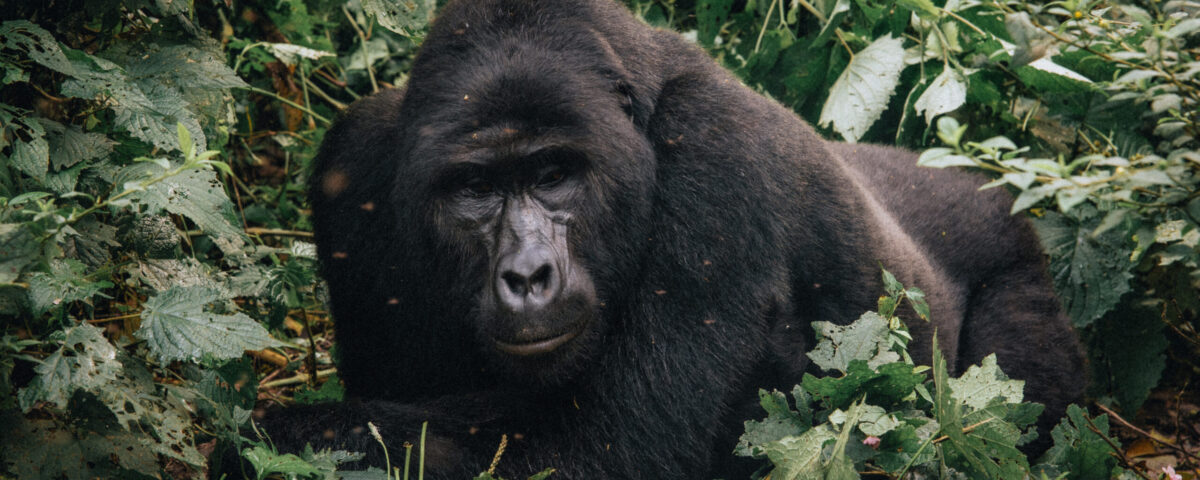
Most people who ask us about the gorilla habituation experience are really asking one question: is four hours with the gorillas worth an extra $1,000, or is a standard trek enough? It is not a trick question, and the answer is not always the more expensive option.
Both experiences take place in Bwindi Impenetrable National Park, both put you in front of wild mountain gorillas, and both are among the best days you can have in Africa. They are, however, quite different days. This guide sets them side by side so you can decide with the facts, not the brochure.
The Short Answer
Choose standard gorilla trekking if you want the classic encounter at a fair price: one hour with a fully habituated family, a good chance of calm, close, easy viewing, and a trip budget that still has room for the rest of Uganda.
Choose the gorilla habituation experience if you want to see how gorillas are slowly brought to trust people, you value time over price, and you are happy to be a little more flexible about what the morning looks like. The extra hours are the point. The extra price is the cost of them.
Gorilla Habituation vs Trekking at a Glance
| Standard gorilla trekking | Gorilla Habituation Experience | |
| Permit price | $800 (foreign non-resident) | $1,800 |
| Time with the gorillas | 1 hour | Up to 4 hours, counted once the family is found |
| Group size | Up to 8 visitors per family | Up to 4 visitors |
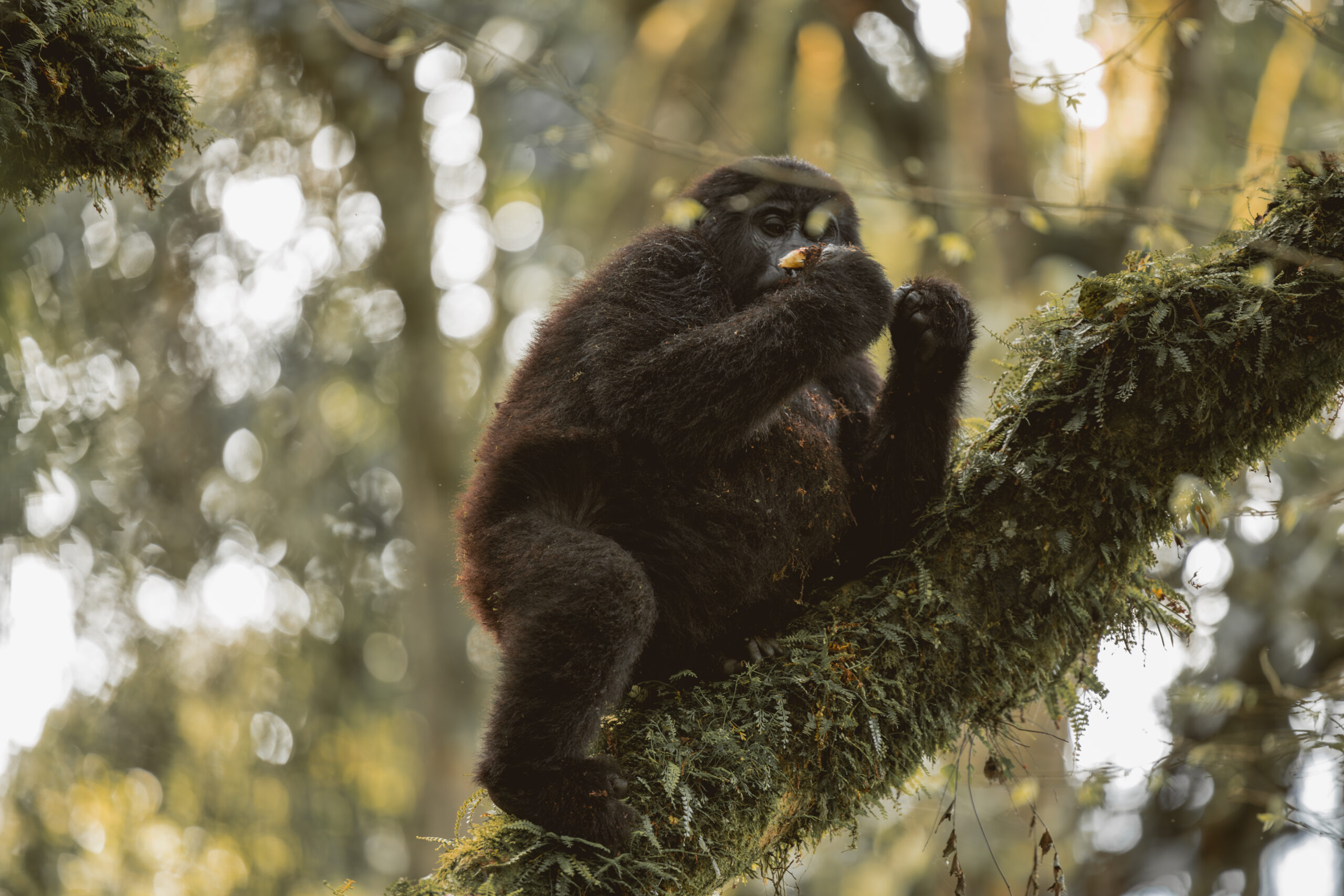
| Gorillas | Fully habituated, used to people | Semi-habituated, still learning to trust people |
| Where | Bwindi (four sectors) or Mgahinga | Rushaga sector, Bwindi only |
| Permits per day | Many, across all habituated families | 8, across two families |
| Minimum age | 15 | 15 |
| Cost per hour with gorillas | $800 | About $450 |
What Gorilla Habituation Actually Is
Habituation is the process of teaching wild gorillas to tolerate human presence so that they can be visited safely and without stress, as part of tourism and research. It takes about two to three years of daily contact by trackers and researchers before a family is considered habituated and can be opened up for standard trekking.
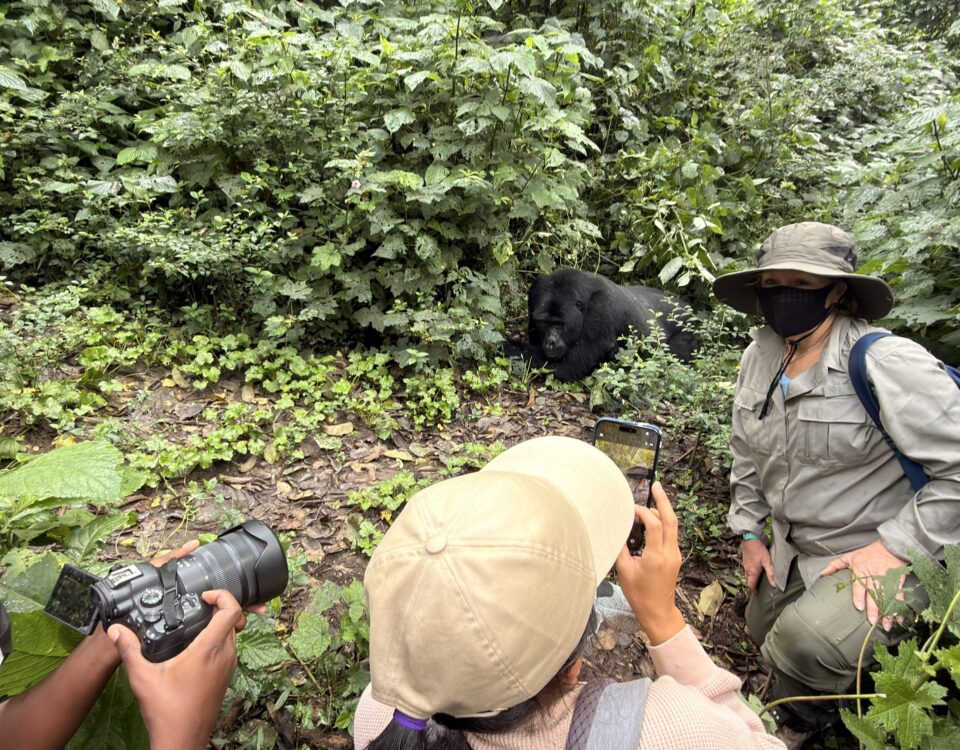
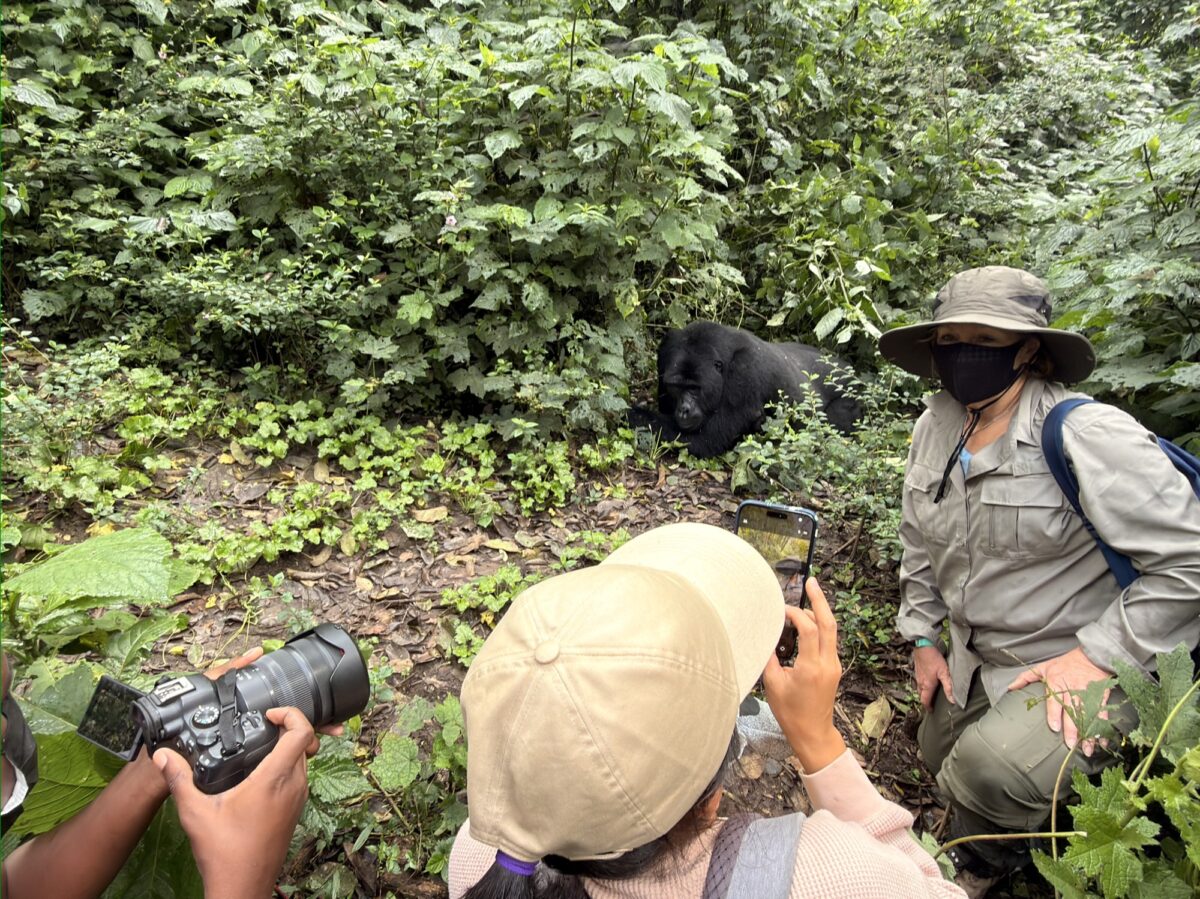
On the habituation experience, you join that process. The families involved are semi-habituated, which means they are partway there. They know people, but they are not yet fully relaxed around them. You walk with the trackers and researchers, and once the family is found, you stay with them for up to four hours, watching how the team works and how the gorillas respond.
In Uganda, this experience is offered only in the Rushaga sector of Bwindi. Rwanda and the other Bwindi sectors do not offer it, so if it is on your list, it shapes where you sleep.
What the Day Looks Like
A standard trek and a habituation day begin the same way: an early briefing at the park, a short talk from the rangers, and a walk into the forest. After that, they diverge.
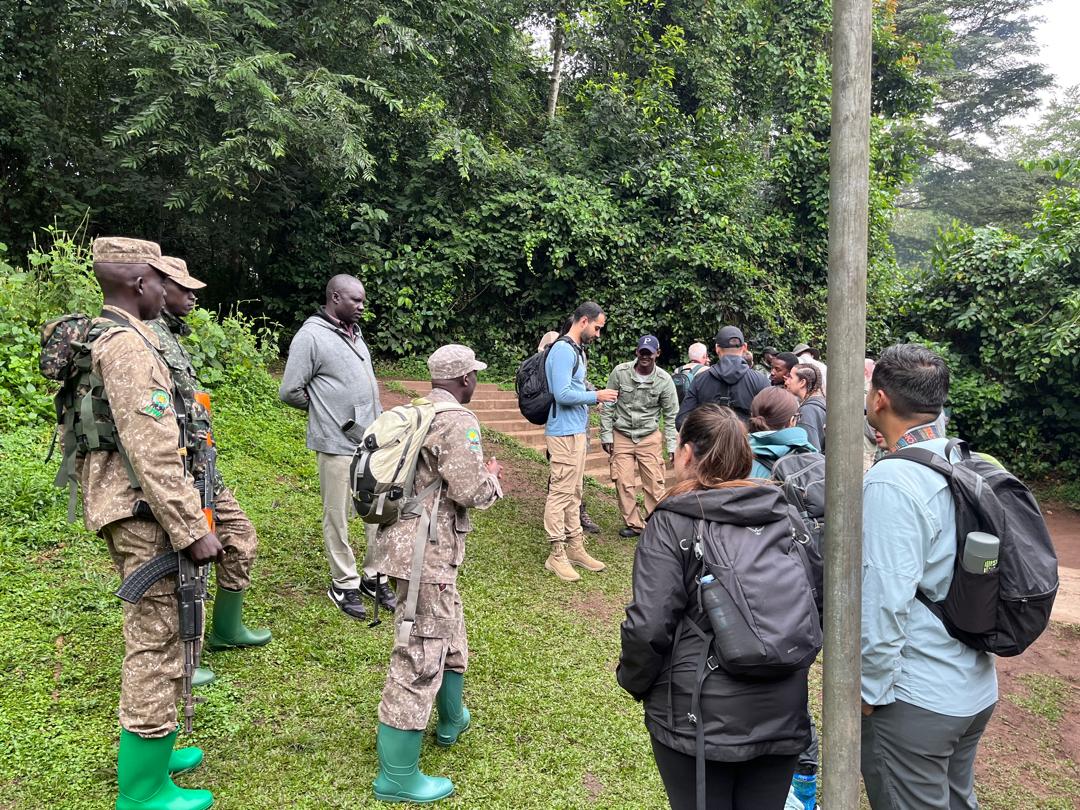
On a standard trek, trackers have usually located the family already, so the walk is aimed at a known spot. It can take anywhere from thirty minutes to several hours, depending on where the gorillas spent the night. Once you arrive, you have one hour.
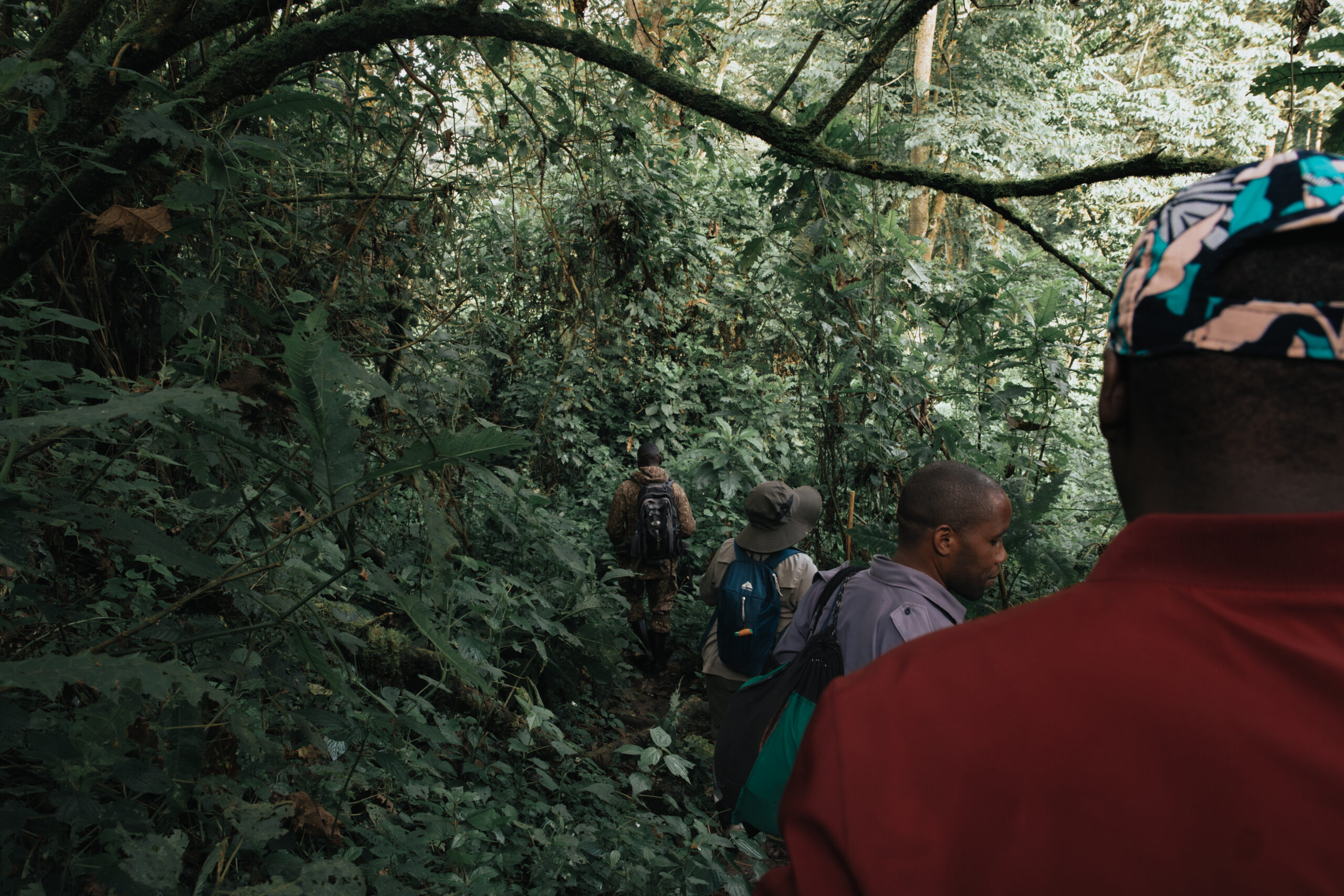
On the habituation experience, the team starts from where the family was last seen and works forward from there. That can make the walk longer or less predictable. When the family is found, the four hours begin, and you can spend that time watching feeding, resting, play, and the quiet interactions between family members that an hour rarely has room for. You are also more likely to see the researchers’ routine up close: how they read behavior, how they keep distance, and how they judge when to move back.
The briefing usually starts around 8:00 AM, and most groups are back at the lodge in the Afternoon. Plan the rest of your day around a long outing, not a morning one.
What You Pay For, and What You Don’t
The habituation permit costs $1,800 per person, compared with $800 for a standard permit. That is $1,000 more. Spread across the time you get with the gorillas, it works out to roughly $450 an hour for habituation against $800 for the one hour of a standard trek. So, on a per-hour basis, habituation is actually the cheaper way to spend time with gorillas.
That math is only useful if you want four hours. If an hour is plenty for you, then the extra $1,000 buys time you may not use. Many pages still quote $1,500 for the habituation permit. The current price is $1,800, so check the date on anything you read.
Two other costs are easy to overlook. First, because the experience is only in Rushaga, you will need to sleep nearby. A night or two near Rushaga is part of the real price of the day, and so is the drive to get there. Second, permits must be paid in full at the time of booking, so you need to decide earlier than you might expect.
The Honest Trade-Offs
Habituation is often described as simply a better, longer version of trekking. It is not, and we would rather tell you that now than have you find out on the mountain.
- The gorillas are less settled. Semi-habituated families can be more cautious and more mobile than fully habituated ones. Some days they are calm and close. Other days they keep their distance, or move on while you are still watching.
- It is less predictable. Because the team follows the family from its last known position, the walk can be longer, and the outcome is less certain than on a standard trek.
- It is more tiring. Up to four hours on your feet, in humid forest, on steep ground, is a lot more than one hour. Fitness matters more here.
- Close-up is not guaranteed. If your picture of the perfect encounter is a gorilla sitting calmly a few meters away, a standard trek is the more reliable way to get it.
None of this makes habituation a worse choice. It makes it a different one. The reward is time, and a more honest look at wild gorillas as they actually are, not as a finished tourism product.
Who Each One Suits
Standard gorilla trekking suits you if:
- This is your first time seeing gorillas, and you want the classic, dependable encounter.
- You would rather spend the $1,000 difference on lodges, a second primate trek, or another part of the trip.
- You have limited time, or you want the freedom to trek in Bwindi, Mgahinga, or Rwanda.
- You prefer a shorter day on your feet.
The habituation experience suits you if:
- You want time, not just a sighting, and an hour feels too short before you have even begun.
- You are a photographer, or someone who likes to watch and understand behavior.
- You are curious about the conservation work behind gorilla tourism.
- You are comfortable with a longer, less certain day, and you are in good physical shape.
Can You Do Both?
Yes, and a number of repeat visitors do. A common pattern is to start with a standard trek and add habituation on a later trip, or to combine both in one visit by booking them on separate days, so that you can compare the two. Doing both is also the best way to understand what habituation really means, since you see the finished result on one day and the work in progress on the next.
Which Should You Choose?
If it is your first time, and you are not sure, a standard trek is the safer choice. It is reliable, it is well priced, and it delivers the thing most people travel for. If you already know that one hour will not be enough, or you have trekked before and want something deeper, habituation is worth the extra. Neither choice is wrong. They are two ways to spend a day with one of the rarest animals on earth.
Frequently Asked Questions
Is the gorilla habituation experience worth it?
It is worth it if you want more time with the gorillas and you are comfortable with a longer, less predictable day. If a single hour would satisfy you, a standard trek gives better value.
Is habituation harder than regular trekking?
Usually, yes. The walk can be less predictable, and you spend up to four hours with the family rather than one. Good fitness and sturdy boots help a great deal.
Do you get closer to the gorillas on a habituation experience?
Not necessarily. You get longer, not closer. The gorillas are still learning to accept people, so they may keep more distance than a fully habituated family would.
Where can I do gorilla habituation?
In Uganda, only in the Rushaga sector of Bwindi Impenetrable National Park.
How many people can join?
Up to four visitors per group, compared with up to eight on a standard trek. Only eight habituation permits are available each day.
What is the minimum age?
Fifteen, the same as standard trekking.
Can I take photos?
Yes. Flash is not allowed. The longer time makes it a favorite with photographers, because the light and the gorillas change over four hours.
How far ahead should I book?
At least six months ahead is sensible, since only eight permits are released each day. Permits are paid in full at booking.
Can I do both habituation and a standard trek?
Yes, on separate days. Many repeat visitors do.
Read Further
If you are still weighing the numbers or the logistics, these guides go deeper:
- Uganda Gorilla Trekking Cost 2026: Full Breakdown – permits, lodging, transport and the full trip budget
- How Much Does Rwanda Gorilla Trekking Cost in 2026 – if you are also comparing Rwanda
- Bwindi vs Mgahinga: Which Is Better for Gorilla Trekking – choosing where to trek
- What to Expect on a Gorilla Trek – the standard trek, hour by hour
Planning Your Gorilla Trek
If you are still weighing the two, tell us how many days you have, who is traveling, and how much you like to walk. We will give you a straight view on which one suits your trip, and what it means for where you stay. WhatsApp us at +256 742 111 959 or write to travel@jackaladventuresafrica.com