Mountain Gorilla Festival 2026
October 29, 2026
Before a gorilla trek, travelers ask us the questions they planned to ask, and then a second set they were a little shy about. Will I be safe? What if I can’t keep up? What happens if I need the bathroom? This page answers both, in plain language, the way we would answer them on the phone. No question is too small.
Where a topic has its own guide, we give the short answer here and point you to the longer one at the end.
Safety and worries
Is gorilla trekking dangerous?
Not in the way most people imagine. The families you visit are habituated, which means they are used to people, and armed rangers and trackers lead every group. Serious incidents are very rare.
The risks you are more likely to meet are practical ones: slipping on wet ground, nettles, and tiredness on steep slopes. Good boots, gloves and a steady pace take care of most of it, and your ranger will explain how to behave before you set off.
Is it safe to travel in Uganda, with local people around?
Yes. Ugandans are known for being welcoming, and the villages around the parks have welcomed visitors for years. Many people work as guides, porters, drivers, and lodge staff, so you will meet them throughout the trip.
As anywhere, use ordinary common sense: in a big city like Kampala, keep valuables out of sight and use trusted drivers. On our trips, your driver-guide is with you throughout.
What if a gorilla charges, comes close, or touches me?
Stay calm and do not run. Crouch down slowly, keep your eyes lowered instead of staring at the gorilla, and let your ranger deal with it. Rangers know the sounds that settle a group.
Most of the time, a gorilla that comes close is curious or simply walking past, and a nudge or a brush is not an attack. However, in the rare event that they turn aggressive, you should back away slowly and gently, following your ranger’s instructions.
Can gorillas smell fear? Do they bite?
There is no evidence that gorillas smell fear. What they respond to is behavior: sudden movements, loud voices, and staring can unsettle them, and calm, quiet movement keeps everyone relaxed.
Gorillas are powerful animals and can bite, but with habituated families and rangers present, it is very rare for anything like that to happen to a visitor.
What if I get sick or hurt and can’t finish?
Tell your ranger straight away. The group moves at the pace of the slowest person, and rangers can slow down or rest the group. If someone needs to turn back, an armed ranger will accompany you safely back to the park headquarters or trailhead with the help of porters.
If you feel unwell on the morning of your trek, please say so before you set off. Mountain gorillas can catch our illnesses, and visitors who are ill are not allowed on the trek. While gorilla permits are generally non-refundable, if you are declared unfit to track due to illness right at the park, a 50% refund (minus bank charges and taxes) may be authorized, but it is not guaranteed.
What if it rains? Is the trek cancelled?
Treks normally go ahead in the rain, since the rainforest is wet at any time of year. Pack a waterproof jacket or poncho, a rain cover for your daypack, and boots with good grip. The trails get muddy and slippery, so go slowly.
Will there be snakes, nettles or insects?
Nettles and biting ants are the most common nuisances, which is why we suggest long sleeves, long trousers tucked into socks or gaiters, and thin gloves. Snakes live in the forest but are rarely seen, and a group walking through usually keeps them away.
Questions people are too shy to ask
I’m nervous about meeting a gorilla. Is that normal?
Completely. Many people feel it at the briefing, and it usually fades once you are with the family. Your rangers will explain exactly what to do before you set off, and they will be beside you the whole time.
Will I be the slowest and hold everyone up?
Not at all. If you are slower, we simply wait for you. We respect everyone’s pace, and the group moves at the speed of whoever needs it.
If you need a rest, just say so, and the rangers will stop. Nobody is counting, and this is not a race.
Is it embarrassing to be carried in a chair or to hire a porter?
No, not at all, and there is a reason it is offered. To be transparent, most trekkers do not use a chair, and it is not common. It is offered because some people do need it, so there is nothing unusual about asking.
A porter costs $20 and is optional. If you are fit and travelling light, you can manage without.
Can I trek if I’m pregnant?
Yes, if you have no underlying issues and are having a generally healthy pregnancy. If you are six months or more along, a doctor’s note is recommended.
Please see your doctor first, and tell us when you enquire so we can plan the group and the pace with you.
What if I need the bathroom?
It is a bush toilet, so just be ready for that. That is simply how it is. Use the toilet at the start before you set off, and if you need to go on the trail, tell your ranger. They will take you to a spot away from the trail and the gorillas, dig a hole 30 cm deep, and ensure everything is buried securely.
It is one of the most common questions we hear, and nobody in the group will mind.
Can I trek on my period?
Yes. Pack what you need, and tell a ranger if you need a stop. There are no bins in the forest, so bring a small sealed bag (Ziploc bags) to carry used items out with you.
Do gorillas smell?
Not usually. Gorillas do not normally smell, but it is possible to notice a musky scent now and then, especially close to a silverback.
It isn’t an issue, and most people are too busy watching the family to notice it.
Fitness and body
How hard is gorilla trekking, and do I need to be very fit?
It is not as difficult as it sounds. People from the very fit to the quite trek, and they manage well. If you can walk comfortably at a reasonable pace, there is nothing unusual about it. Treks last from about 30 minutes to a few hours, depending on where the family spent the night.
This is not a race. Your guide will gladly slow down if you are not fresh that day or you are having any trouble.
How do I prepare for a gorilla trek?
There is not much to prepare. It is really just a walk in the forest. If you walk in your daily life and have no general health issues, you will be fine. Break in your boots before you travel and pack the basics, and that is about it.
Can I choose an easier trek or gorilla family?
You cannot book a specific gorilla family in advance. Rangers assign visitors to gorilla families at the morning briefing, with fitness in mind.
If you prefer a shorter or gentler trek, inform your ranger during briefing. They will do their best, but gorillas move, so an “easy” family is not always close that day.
Can I trek with asthma, a bad knee, or other conditions?
Please do not feel insecure about it. These conditions are far more common among trekkers than you might think. The most important thing is to tell us beforehand, not because we think it will be dangerous, but because it is good for us to know in advance so we can be there to assess if anything comes up. A walking stick, a porter, a slower group or a carried sedan chair can all be arranged. If you are unsure, check with your doctor first.
Carried chairs (sedan chairs) are carried by a team of porters. They are arranged in advance and are limited, with costs typically ranging from $300 to $500 USD depending on the sector and terrain, so reserve early.
What to wear and bring
Can I wear jeans?
We don’t recommend them. Jeans can be uncomfortable: they are heavy and restrict your movement on steep, slippery ground, and once they get wet they stay wet and cold for hours.
Lightweight, quick-drying trekking trousers are much more comfortable, especially when it rains.
Can I wear shorts?
We suggest long trousers. It isn’t only about bites and stings. When you walk and brush against the grass and undergrowth, it can be itchy and irritating on bare legs.
Nettles, thorns, and biting ants are also common on the trail, so covering up is simply more comfortable.
Can I wear camouflage?
Best avoided. In Uganda, wearing camouflage or military-style clothing is strictly prohibited for anyone, including children, as these patterns are legally reserved for armed forces, so choose muted greens, browns, and khaki instead, which also blend in with the forest.
Do I really need gloves and gaiters?
They are nice to have, but plenty of people trek without them and come out fine. Gloves help when you grab branches and vines for balance, and they protect your hands from nettles. Gaiters, or trousers tucked into thick socks, keep out mud and biting ants. If you do not have them, do not worry.
Can I use a walking stick?
Yes. Walking sticks are provided at the start of the trek, and they are free.
Many people find one useful on steep and slippery ground, particularly going downhill, so it is worth taking one even if you think you won’t need it.
What if I wear glasses or contacts?
Use a strap or band for your glasses and bring a cloth, because masks (required near the gorillas) can fog lenses. If you wear contacts, bring a spare pair and eye drops in a sealed bag, as sweat, dust and flying insects can irritate your eyes.
Do I need to bring lunch and snacks?
Lodges can usually arrange a packed lunch. Please check whether lunch is included on your trip or if you need to request it at the reception in the evening.
Bring at least two liters of water and snacks such as nuts or bars to carry in your daypack. You cannot eat or drink while you are with the gorillas, so rangers will tell you when to take a break.
Will my phone work?
Signal is patchy. Some areas have coverage, but not enough to rely on, and lodge Wi-Fi varies.
Let your family know that you may be out of reach for a day, and download anything you need, such as maps and tickets, before you go.
Will the lodge wash my muddy clothes?
It depends on the lodge. Some offer laundry, and some do not, so most people plan for this by packing an extra pair of trousers or doing a light wash.
Ask us before you travel, and we can tell you what your lodge offers.
What if I forget my passport?
Bring it, and carry the original, not a copy. Your passport is checked at the briefing along with your permit, and you will not be able to trek without the right identification. No other forms of identification are accepted.
Meeting the gorillas
What do the gorillas actually do during the hour?
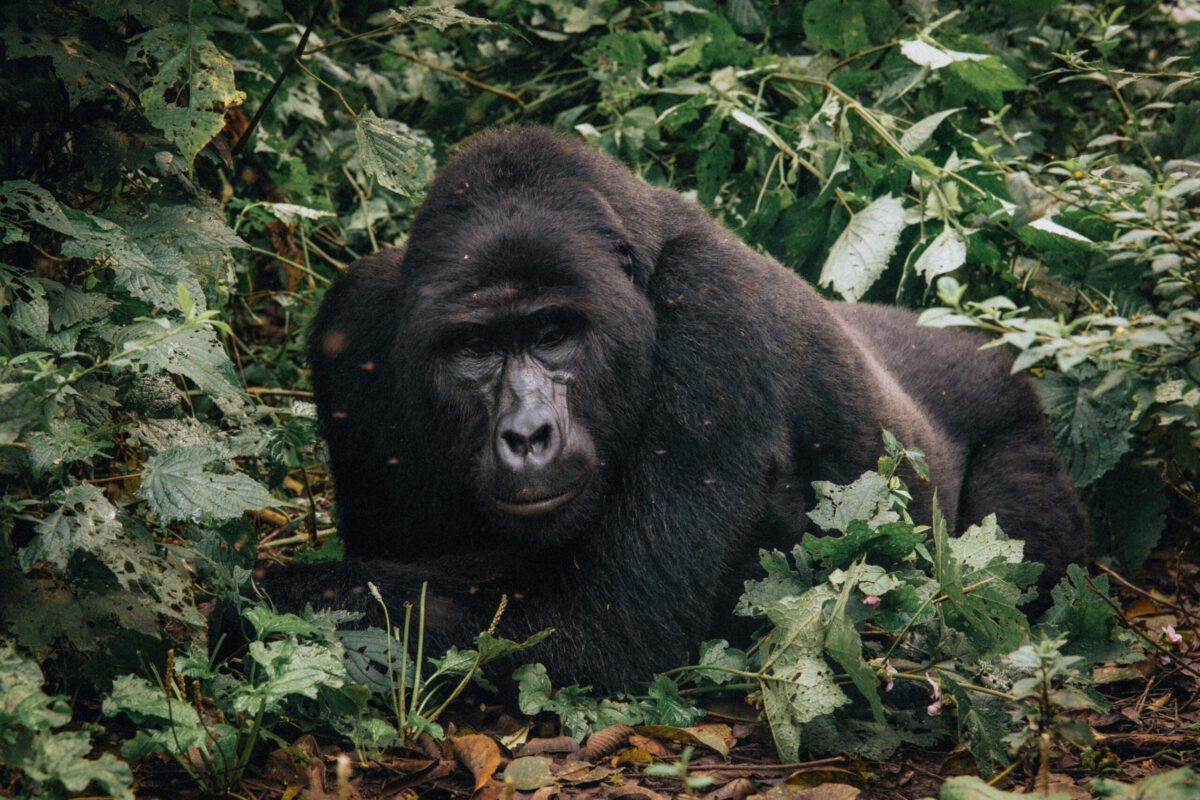
They mostly stay and hang out, and visitors tell us that is what makes it special. The young ones keep climbing and playing, while the adults sit and rest or doze.
They are not performing, and some will simply ignore you. That is a good sign, because it means they are relaxed.
Can I touch, feed or stare at a gorilla?
No to all three. Even if a young gorilla comes close, you must not touch it, and you must keep a minimum distance of 10 meters. Do not eat or offer food, and avoid staring, since direct eye contact can be read as a challenge.
How old are the gorillas, and do they have names?
Yes, they have names. Rangers and trackers know each gorilla by name and by its nose print, which is as individual as a fingerprint. A family usually includes a silverback, females, young gorillas and sometimes babies, and your ranger will introduce them.
Do I have to wear a mask?
Yes. Masks are required during the encounter, and they exist to protect the gorillas, not you. Gorillas have no immunity to many human illnesses, so a mask reduces the chance of passing one on. Your guide will tell you when to put yours on, once the trackers have found the family. Carry a few spares in your daypack.
Can I cough, sneeze, talk or laugh near them?
Keep your voice low and avoid shouting. If you need to cough or sneeze, turn your head away, cover your nose and mouth, and let your ranger know, because the aim is not to contaminate the gorillas. The mask helps with this, which is why it stays on throughout.
Can I take photos, selfies, or use a drone?
You can take photos, but flash is not allowed. Drones are not permitted in all Uganda national parks without permits. For selfies, follow your ranger’s guidance and do not turn your back to the gorillas or move closer for a better shot.
Booking and practical questions
Why can’t children under 15 trek?
The minimum age is 15, and it is strict. Gorillas are wild animals and are easily unsettled by sudden noise. A child who cries, runs or gets excited can disturb the group, and a disturbed family may move away, which could cost everyone in the group the experience they came for.
There is a health reason too. Children are more likely to carry illnesses that gorillas could catch. It is about protecting the gorillas and the hour everyone has paid for, not a judgement on any child. If you are travelling with younger children, there is still plenty for them to do in Uganda.
Can I bring my kids or an older parent?
Children under 15 cannot trek, and the reason is explained above. Older parents are welcome, and the guides will walk at their pace.
A porter can carry bags and give a hand on slippery ground, and a carried chair can be arranged in advance. Please tell us beforehand so we can plan.
Can I trek alone as a solo traveler?
Yes, it is possible. On the trek, you walk with other visitors in the park’s group, along with rangers and trackers, so you will not be on your own.
The main difference is cost. Our trips are private, so a solo traveler carries the cost of the vehicle and guide alone, and we do not run joining groups at the moment. It is worth asking us for a quote.
Can I trek without a guide?
No. Gorilla treks are only done with park rangers and trackers, and you cannot enter the forest to find the gorillas on your own.
The gorillas are wild, and the rangers manage the distance, the safety and the health rules for the group.
What time does the day start and finish?
The briefing is at 8:00 AM and the trek follows. Most groups are back at the lodge by the afternoon, depending entirely on how far the gorilla family has traveled.
Plan for most of the day and not just a morning, since the walk to the gorillas can take from 30 minutes to several hours, followed by an hour with the family and the walk back.
What if we don’t see gorillas?
You will see them. Trackers follow the families the day before and again at dawn, so the rangers know where each one is before your group even starts walking.
The length of the walk varies, but you will meet them.
Can I swap my date or transfer my permit to a friend?
Permits are issued in a named person’s name with passport details, so they are not freely transferable. Low-season permits cannot be rescheduled.
For changes of date and all other permits, please contact our team as early as possible; requests are subject to availability and official UWA rescheduling policies. If your plans might change, tell us before you book so we can advise on the best option.
Can I just turn up and pay?
No. Permits are limited and booked in advance, so you cannot count on buying one on the day. Last-minute permits are sometimes available, but it depends on the date and the sector.
For peak months, we suggest booking 6-10 months ahead.
Can I do more than one trek?
Yes, on separate days, with a separate permit for each. Many repeat visitors do two or more treks, often combining different sectors of Bwindi (such as Rushaga + Nkuringo) or adding a Golden Monkey trek in Mgahinga, to meet different families and experience varied terrain. The Uganda Wildlife Authority does not offer multi-permit discounts.
Do I need vaccinations or malaria tablets?
Health and entry requirements change, so please check with your doctor or a travel clinic well before you travel. Official entry rules no longer require proof of a yellow fever vaccination, but the vaccine is still strongly recommended, along with routine boosters for Hepatitis A and Typhoid. Malaria is present nationwide, so ask your doctor about prevention.
Should I tip, and how much?
Tipping is appreciated but not required. Rangers, trackers, porters, and your driver-guide all work hard, and tips are usually given in cash at the end of the trek; standard guidelines suggest tipping $15-20 USD for the head ranger guide, $10-15 USD for the trackers (split among trackers), $10 USD for armed ranger/ security escort, $20 USD for your personal porter, and $15 USD per day for your driver-guide.
Do I get a certificate?
Yes. Everybody gets a certificate, with a small awarding at the end of the trek. It is nothing formal, just for fun.
You gather in the same assembly room as the briefing, and the rangers hand the certificates out.
Read further
Some of these topics have their own guides:
- Uganda Gorilla Trekking Cost 2026: Full Breakdown – permit prices and the full trip cost
- What to Expect on a Gorilla Trek – the day, hour by hour
- Why Do People Wear Masks When Gorilla Trekking? – the reasons and the rules
- Gorilla Habituation Experience vs Gorilla Trekking – one hour or up to four
- Gorilla Trekking for Seniors – pace, preparation and support
Still have a question?
If yours is not here, send it to us. WhatsApp +256 742 111 959 or write to travel@jackaladventuresafrica.com, and we will answer it.