Is Rwanda Safe for Solo Female Travelers? Honest Tips & Advice
November 19, 2026
10 Common Mistakes First-Time Travelers Make In Rwanda
November 23, 2026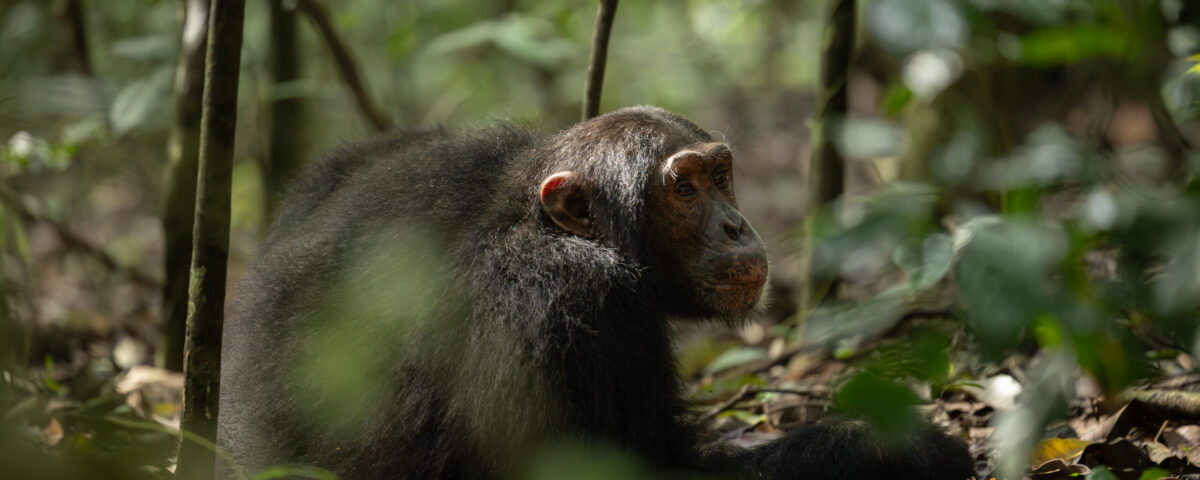

If you dream of watching wild chimpanzees swing through the trees in East Africa, two names will keep popping up on your travel radar. These are Nyungwe National Park in Rwanda and Kibale Forest National Park in Uganda.
From our years of guiding travelers through both forests, we can tell you that each park offers an unforgettable wildlife encounter. However, the day-to-day trail experience feels completely different. When deciding between chimpanzee tracking in Nyungwe vs. Kibale, the best choice comes down to your walking fitness, your budget and the rest of your East African travel route are also important factors.
Here is an honest, easy-to-follow breakdown of how the two parks compare, so you can pick the right forest for your trip.
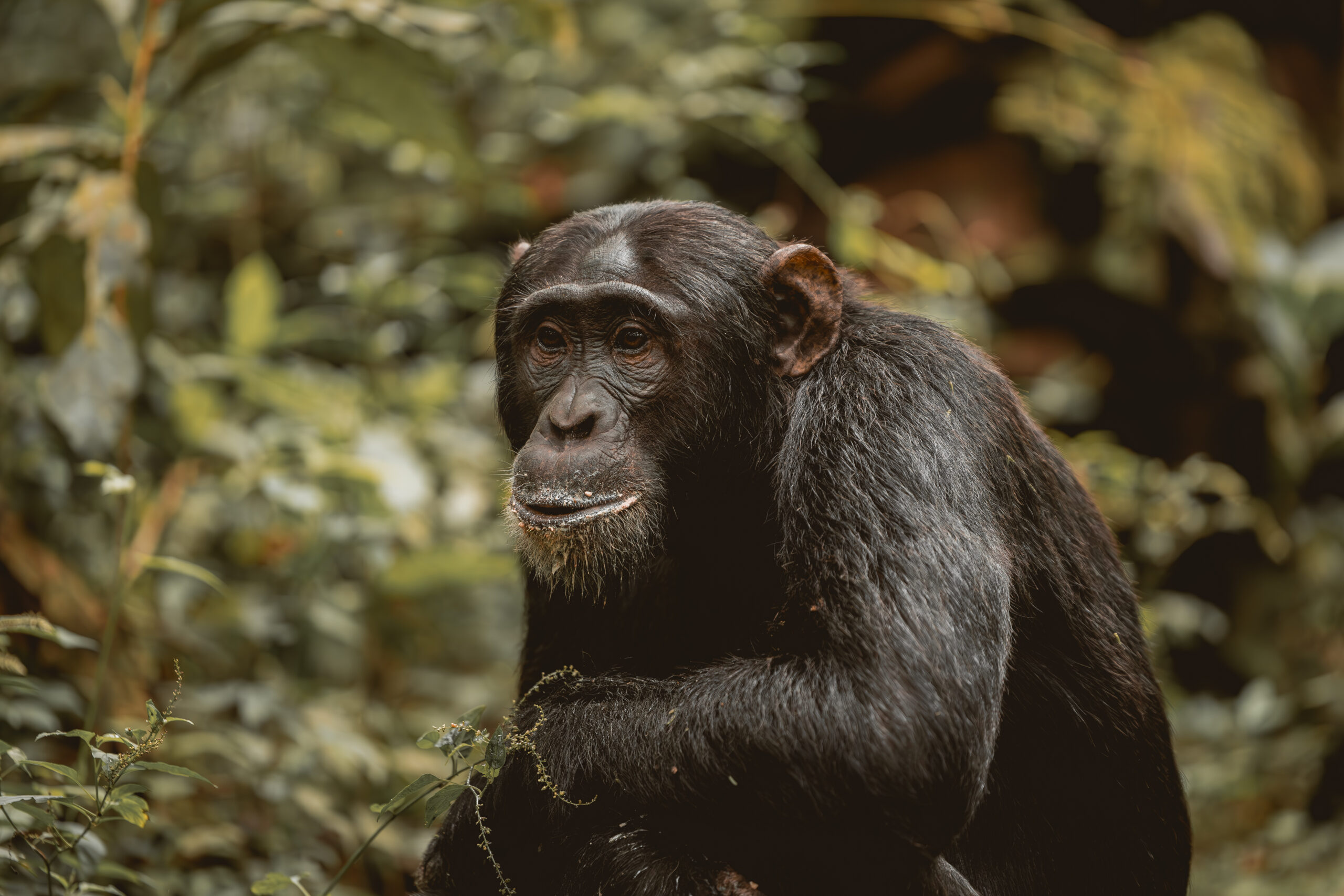
Quick Comparison: Nyungwe vs Kibale
| What You Need to Know | Nyungwe National Park (Rwanda) | Kibale Forest National Park (Uganda) |
|---|---|---|
| Permit Cost (2026) | $250 USD ($150 permit + $100 park entry) | $250 USD (entry included; $200 in Apr, May, Nov) |
| 2027 Permit Cost | $250 USD total (subject to RDB updates) | $300 USD starting January 1, 2027 |
| Number of Chimps | Around 500 chimpanzees | Over 1,500 chimpanzees |
| Start Time | 5:30 AM | 8:00 AM, 11:00 AM, and 2:00 PM |
| Group Size | Up to 8 travelers per group | Up to 6 travelers per group |
| Full-Day Habituation | Available at Gisovu ($200 + $100 park entry) | Available ($300 in 2026; $400 from Jan 2027) |
| Minimum Age | 15 years | 16 years |
What Is the Best Place for Chimpanzee Tracking?
Kibale National Park in Uganda is our top recommendation for chimpanzee tracking, especially for travelers whose main goal is to see wild chimpanzees up close. With over 1,500 chimpanzees—the highest concentration in East Africa—and gentle, easy-to-walk forest paths, Kibale gives you the highest chance of clear, eye-level sightings along with flexible morning or afternoon start times.
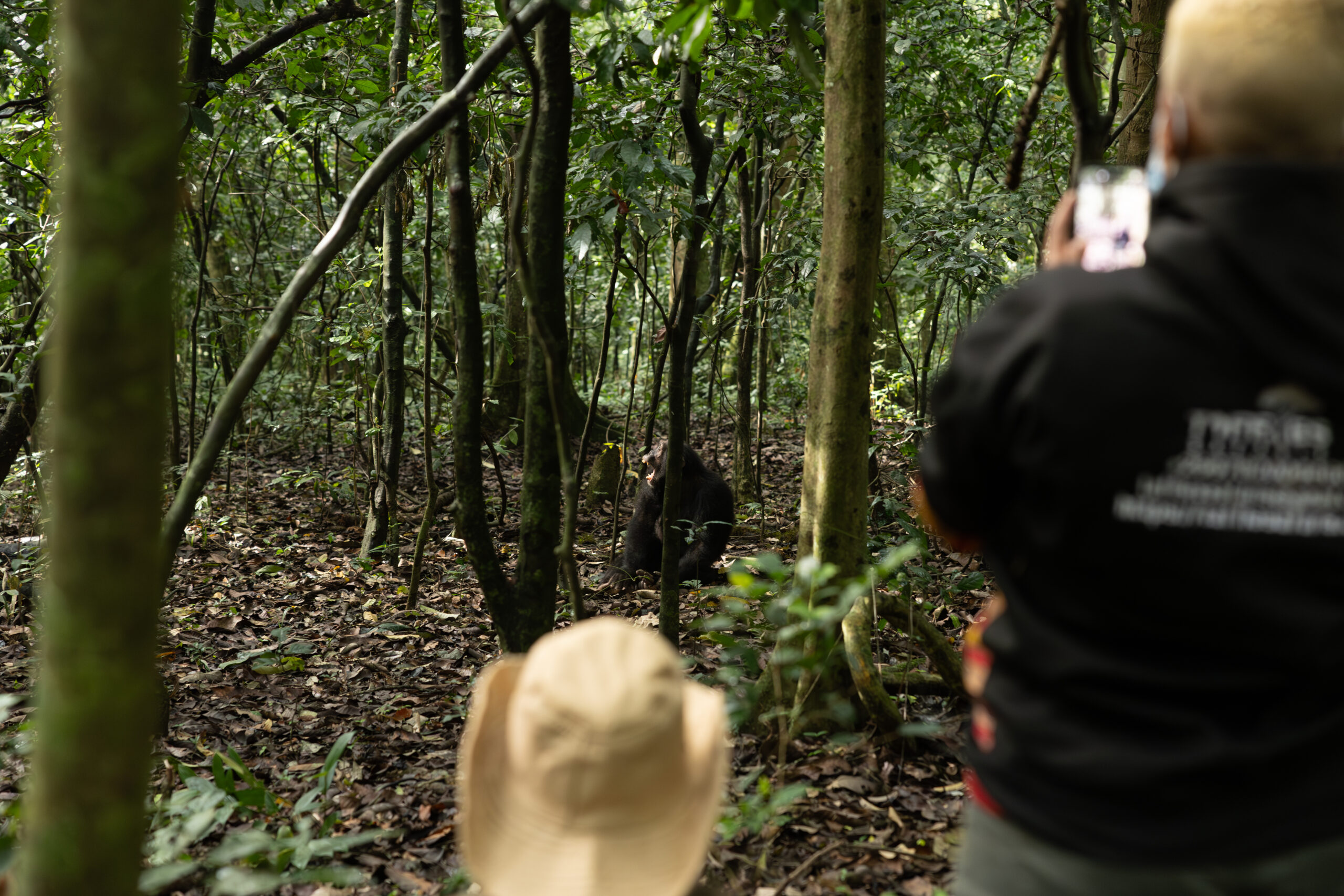
It also connects smoothly to classic wildlife game drives in Queen Elizabeth National Park and gorilla tracking in Bwindi Impenetrable Forest.
That said, the right choice still depends on the kind of trip you want to take:
-
Choose Kibale National Park (Uganda): if you want almost guaranteed chimpanzee sightings, flat and comfortable walking trails, a wider choice of budget-to-luxury lodges, or the chance to spend four to six hours alongside researchers on a habituation trek.
-
Choose Nyungwe National Park (Rwanda): if you enjoy steep, scenic mountain hikes, want to walk across East Africa’s famous Canopy Walkway, or are already visiting Rwanda to see mountain gorillas in Volcanoes National Park and prefer to keep your trip inside one country.
For travelers exploring other regions of Uganda, Budongo Forest near Murchison Falls and Kalinzu Forest near Queen Elizabeth National Park are also great, lower-cost alternatives with healthy chimpanzee populations.
What to Expect on a Chimpanzee Trek
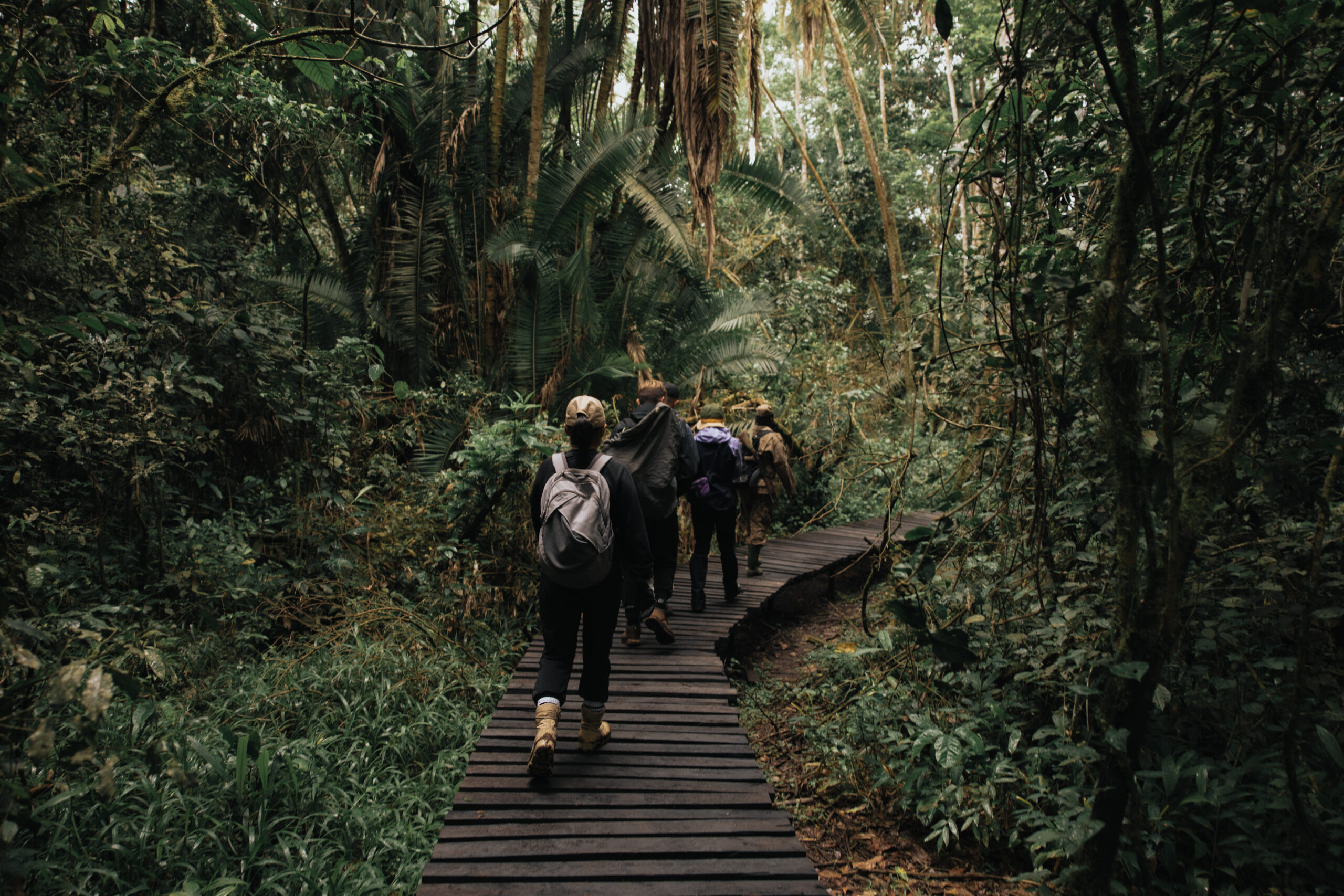
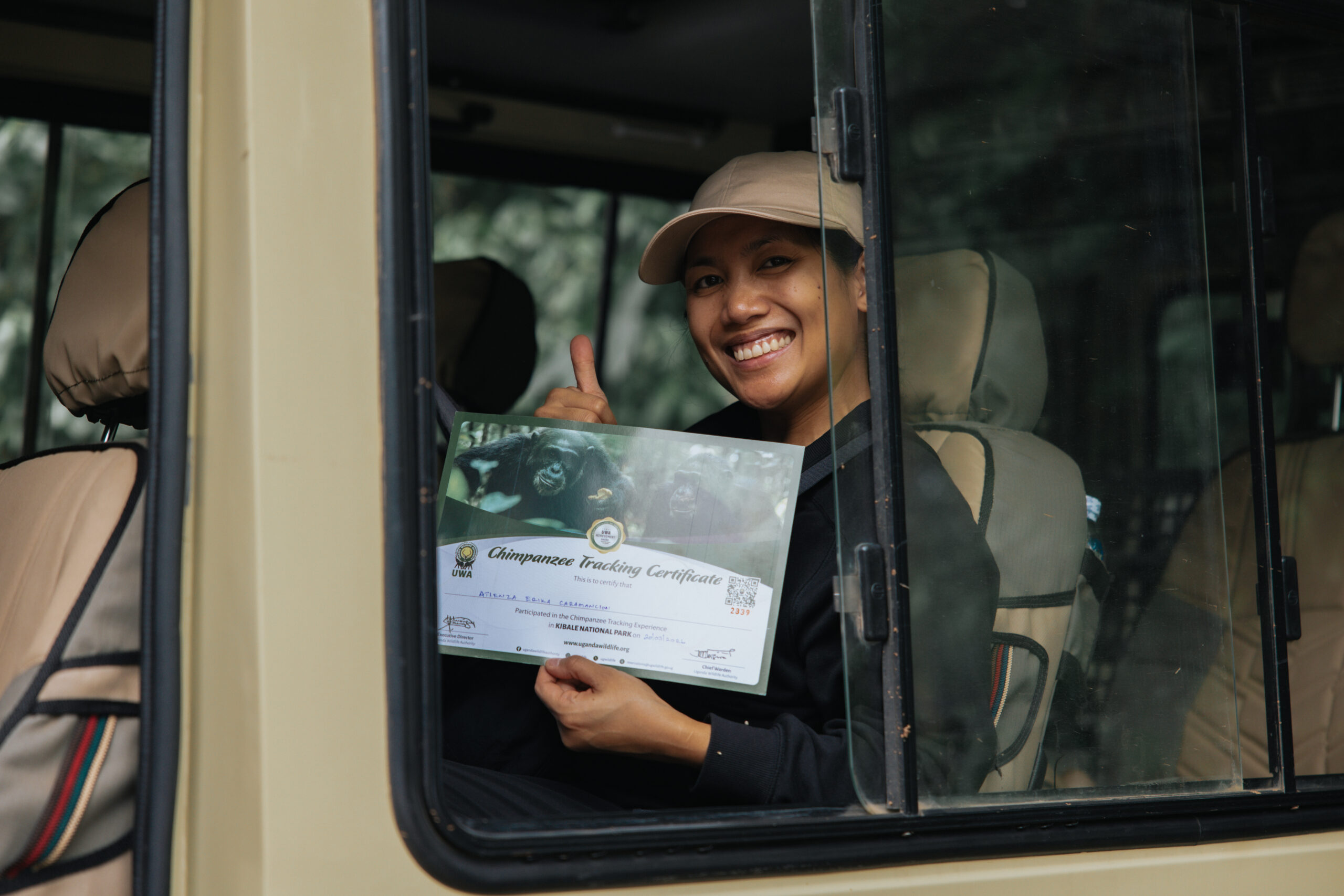
Your chimpanzee trek begins at the park visitor center with a mandatory safety and conservation briefing from your ranger guide, who verifies your permit and assigns you to a small tracking group. From there, you enter the rainforest alongside armed rangers and advance trackers, following fresh footprints, feeding signs, and the distinctive pant-hoot calls of the troop echoing through the canopy.
Depending on where the chimpanzees are foraging that day, the hike typically lasts between 1 and 5 hours across uneven, sometimes muddy forest trails. Along the route, your guide shares insights into the forest ecosystem and points out resident monkeys, birdlife, and medicinal plants. Once you locate the troop, you are granted one full hour to observe them feeding, grooming, and moving between the canopy and forest floor—while adhering to park guidelines, including maintaining a safe distance, keeping voices low, and refraining from flash photography.
Differences Between Gorilla and Chimpanzee Tracking
Many of our guests combine chimpanzee and mountain gorilla tracking on the same safari—and while both treks give you one unforgettable hour with wild primates, the pace, trails, and budget set them apart.
Here is what you can expect when comparing the two out in the forest:
-
Forest Pace: Gorilla tracking is quiet and calm—you sit just meters away while gorillas rest and feed on the forest floor. Chimpanzee tracking is loud and fast-paced, with chimps swinging high in the canopy.
-
Permit Prices: Gorilla permits cost $800 USD in Uganda and $1,500 USD in Rwanda. Chimpanzee permits in Kibale and Nyungwe cost $250 USD in 2026 (rising to $300 USD in Kibale in 2027).
-
Walking Effort: Gorilla tracking involves steeper, thicker mountain slopes, whereas chimpanzee trails are generally flatter and easier—though you move faster once the chimps are spotted.
- Taking Photos: Gorillas move slowly on the ground, which makes it much easier to capture clear, portrait-style photos. Chimpanzees stay higher up in the branches and rarely sit still, making photography more of an exciting challenge.
-
Age Limits: Gorilla tracking requires travelers to be 15+ in both countries, while chimpanzee tracking is open to ages 16+ in Uganda and 15+ in Rwanda.
Our Recommendation: If your schedule and budget allow, do not choose one over the other. Gorilla tracking gives you quiet, eye-level intimacy, while chimpanzee tracking brings raw, high-energy jungle excitement—together, they create the ultimate East African primate safari.
What Other Wildlife Can Be Spotted in Kibale
While chimpanzees are the headline attraction in both parks, Kibale and Nyungwe are two of East Africa’s richest rainforest ecosystems—each protecting 13 primate species, hundreds of forest birds, and elusive woodland mammals. Even during a standard chimpanzee trek, it is common to spot several monkey species and colorful forest birds along the trails.
Wildlife in Kibale Forest National Park (Uganda)
-
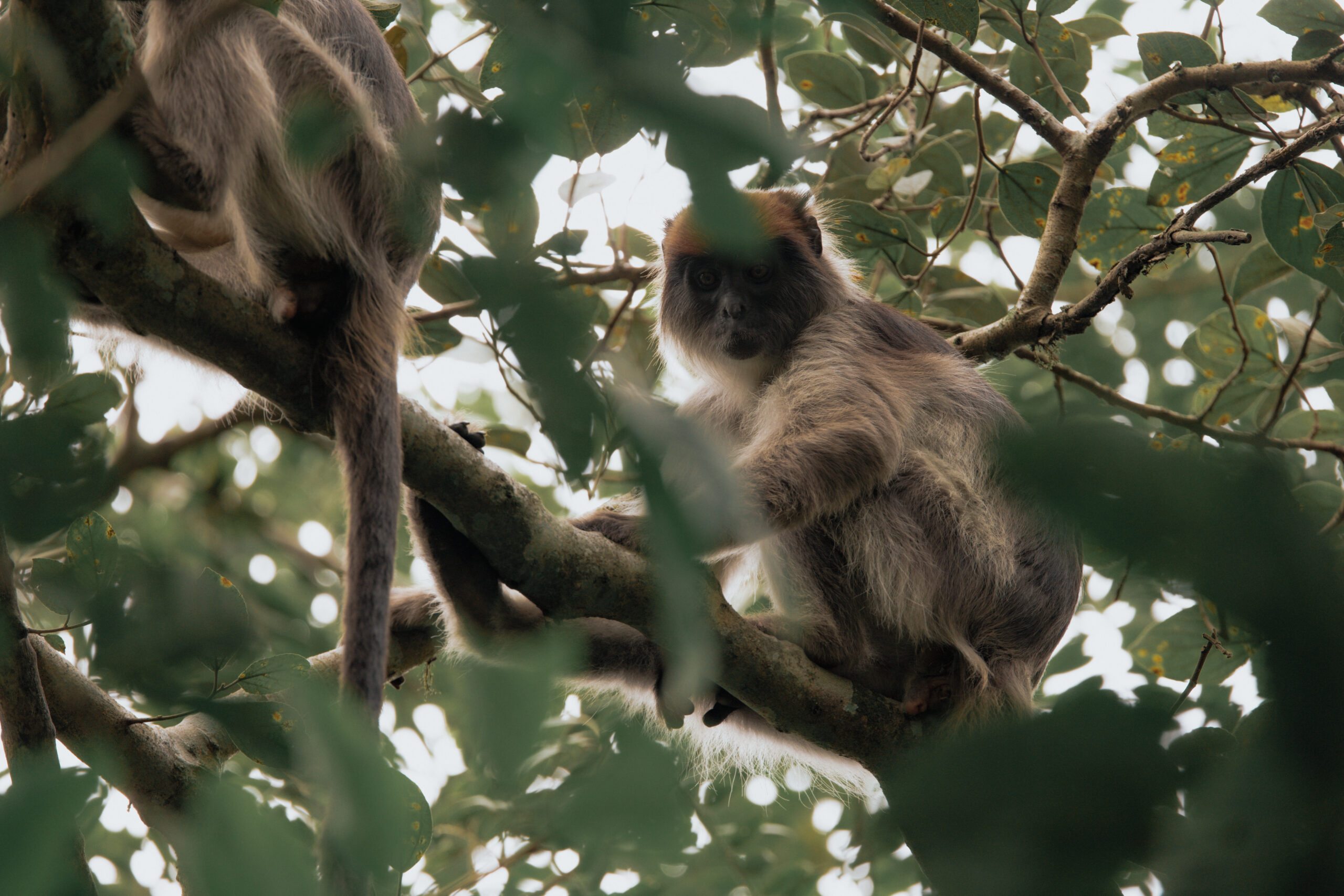
Other Primates (12 additional species): Kibale holds one of the highest primate densities in Africa. Look out for the endangered Ugandan red colobus, grey-cheeked mangabeys, red-tailed monkeys, L’Hoest’s monkeys, blue monkeys, black-and-white colobus monkeys, vervet monkeys, and olive baboons. On night walks, you can also spot nocturnal bushbabies and pottos.
-
Forest Mammals: Around 70 mammal species live in Kibale, though thick vegetation keeps most shy. Lucky trackers occasionally spot African forest elephants, forest buffaloes, bushbucks, red and blue duikers, bushpigs, giant forest hogs, and sitatunga antelopes (especially near Bigodi Wetland).
-
Birds and Butterflies: Kibale hosts over 375 bird species—including the sought-after green-breasted pitta, great blue turaco, black bee-eater, and African grey parrot—alongside more than 250 butterfly species.
Wildlife in Nyungwe National Park (Rwanda)
-
Other Primates (12 additional species): Nyungwe is famous for its Rwenzori (Angolan) black-and-white colobus monkeys, which travel in massive super-troops of 300 to 600 individuals—the largest primate troops recorded in Africa. You can also spot L’Hoest’s monkeys, owl-faced (Hamlyn’s) monkeys, Dent’s mona monkeys, blue monkeys, red-tailed monkeys, and grey-cheeked mangabeys.
-
Forest Mammals: Nyungwe protects 85 mammal species, including black-fronted and yellow-backed duikers, bushbucks, western tree hyraxes, Carruthers’ mountain squirrels, African civets, servals, and Congo clawless otters.
-
Albertine Rift Endemic Birds: With 345 recorded bird species—including 30 Albertine Rift endemics found nowhere else on Earth—Nyungwe is a premier birding hotspot. Highlights include the Rwenzori turaco, red-collared mountain babbler, handsome francolin, grauer’s swamp warbler, and great blue turaco.
Best Time of Year to Visit
You can go chimpanzee tracking in both Kibale Forest and Nyungwe National Park all year round, with the dry seasons (June–September and December–February) offering firmer trails and easier walking in Kibale alongside more comfortable climbs on Nyungwe’s steep mountain slopes, while the wet seasons (March–May and October–November) bring muddier paths, lush scenery, and rich birdlife—plus Uganda’s $200 USD low-season permit rate in April, May, and November—though sudden rain showers can happen in any month, so good grip footwear and a light rain jacket are always essential.
Frequently Asked Questions
Which is better for chimpanzee tracking: Nyungwe or Kibale?
Kibale is best for most travelers thanks to its 1,500+ chimpanzees, gentler trails, flexible start times, and reliable sightings. Nyungwe suits travelers who enjoy steep mountain hikes, want the Canopy Walkway, or prefer a single-country Rwanda route.
How much do chimpanzee tracking permits cost in 2026 and 2027?
In 2026, standard permits cost $250 USD in Kibale ($200 USD in April, May, and November) and $250 USD total in Nyungwe ($150 permit plus $100 park entry). Kibale’s standard permit rises to $300 USD on January 1, 2027.
What is the minimum age for chimpanzee tracking?
Uganda sets the minimum age at 16+ years under UWA tariffs (confirm park rules when booking), while Rwanda requires travelers to be 15+ in Nyungwe.
How long does a chimpanzee trek last?
You get one hour once you find the troop, with total forest time typically lasting 1 to 5 hours—usually shorter and flatter in Kibale, and longer and steeper in Nyungwe.
Should I do chimpanzee habituation instead of standard tracking?
Choose habituation if you want several hours alongside researchers as chimps adjust to humans; choose standard tracking for a shorter outing with a guaranteed one-hour viewing window.