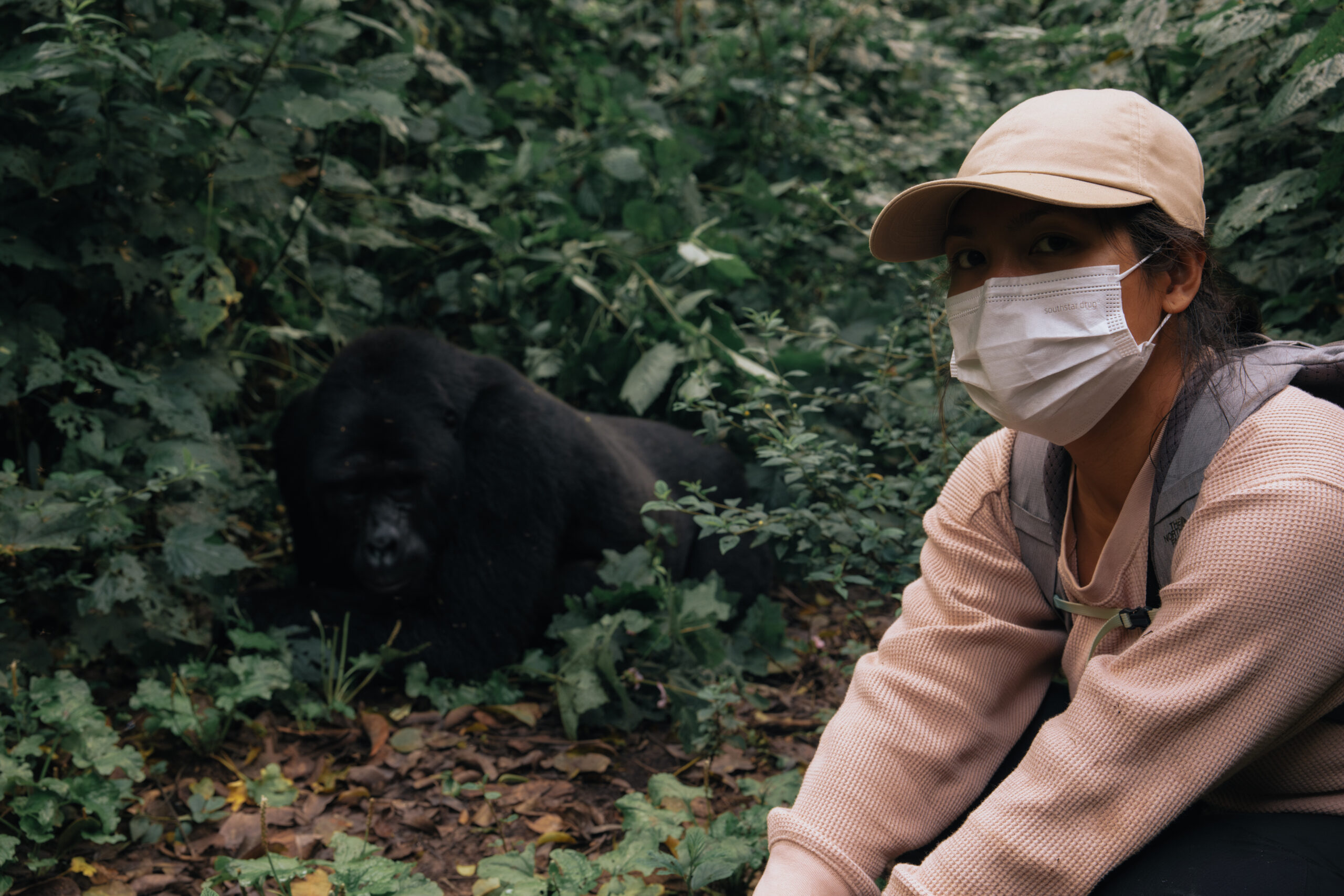
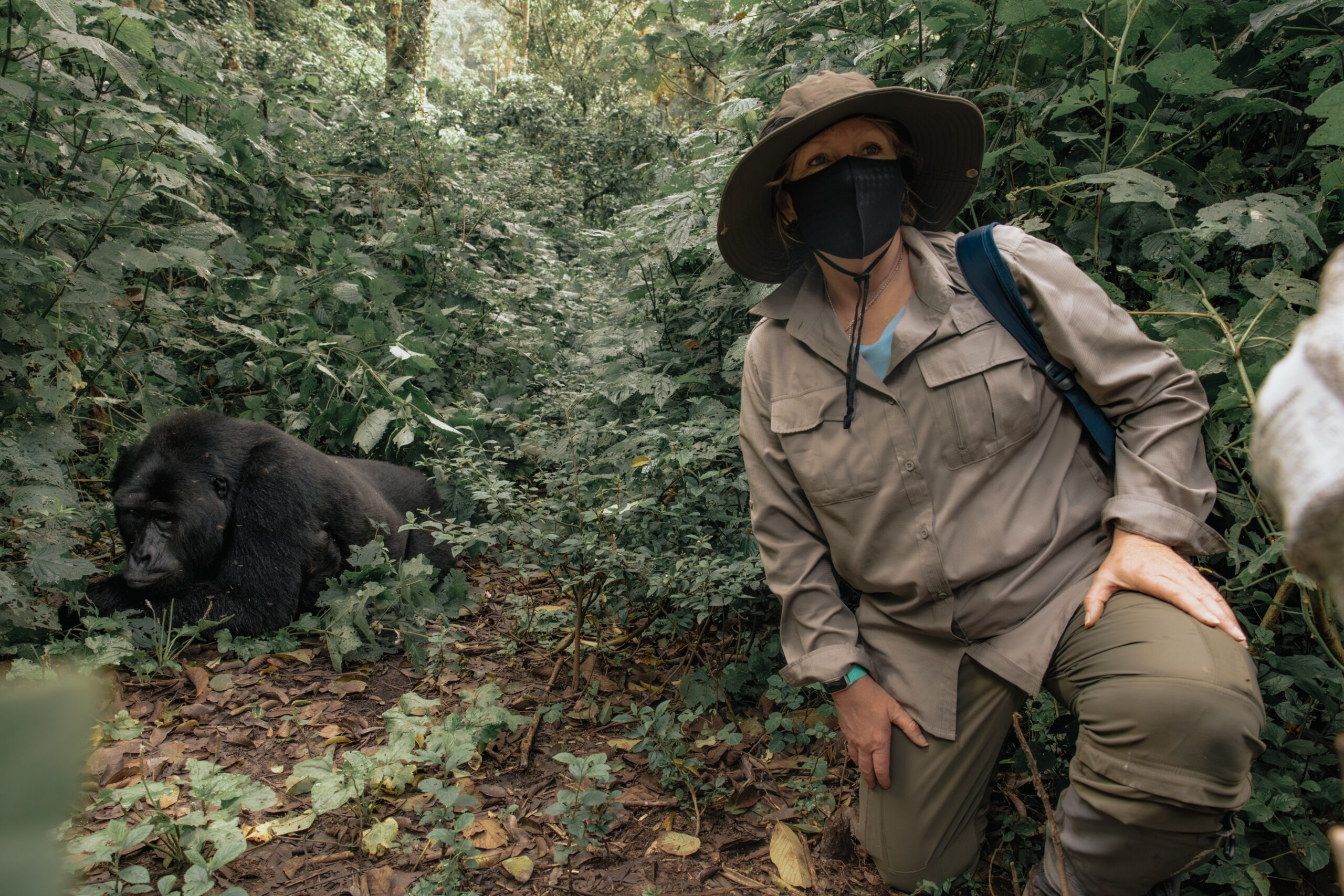
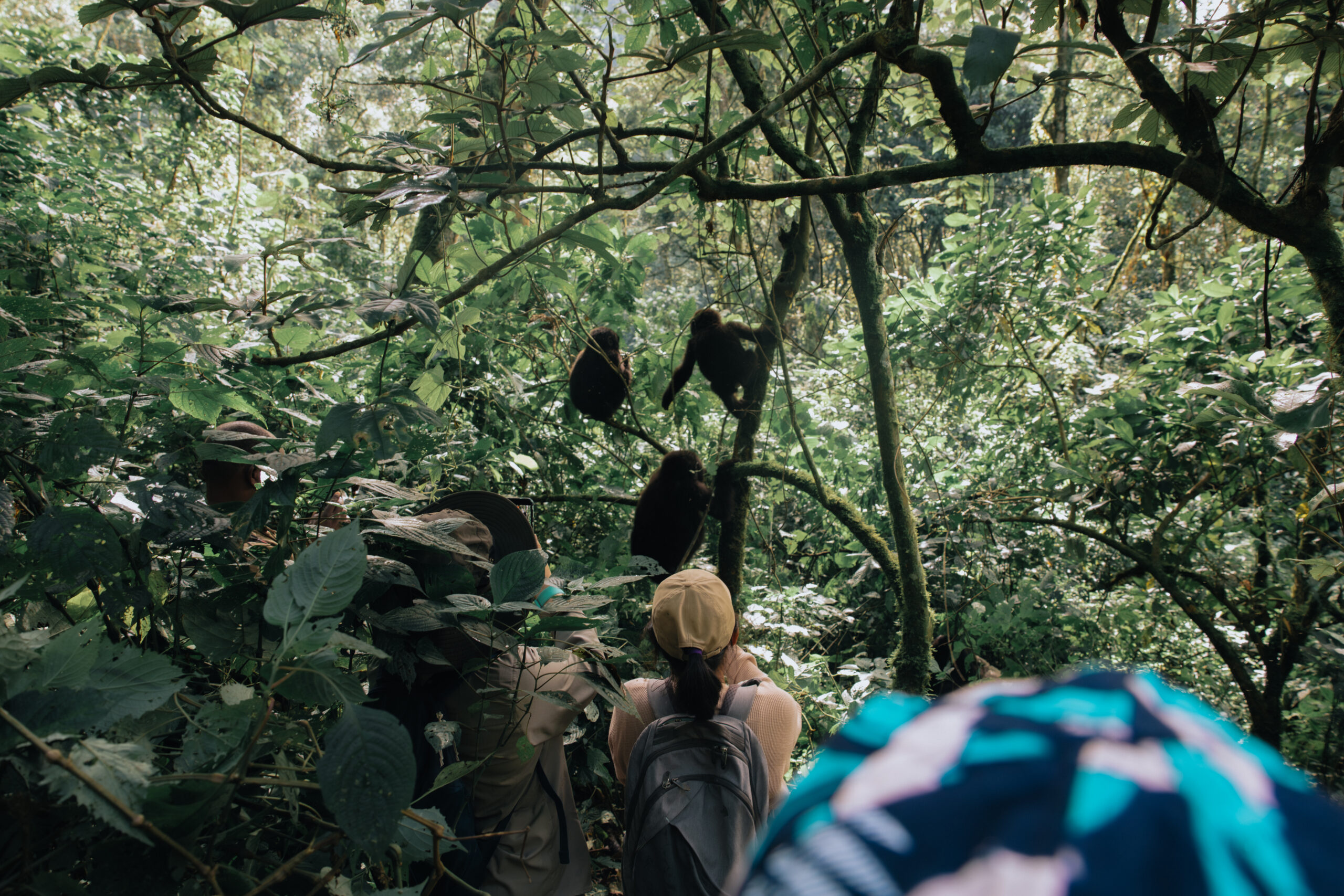
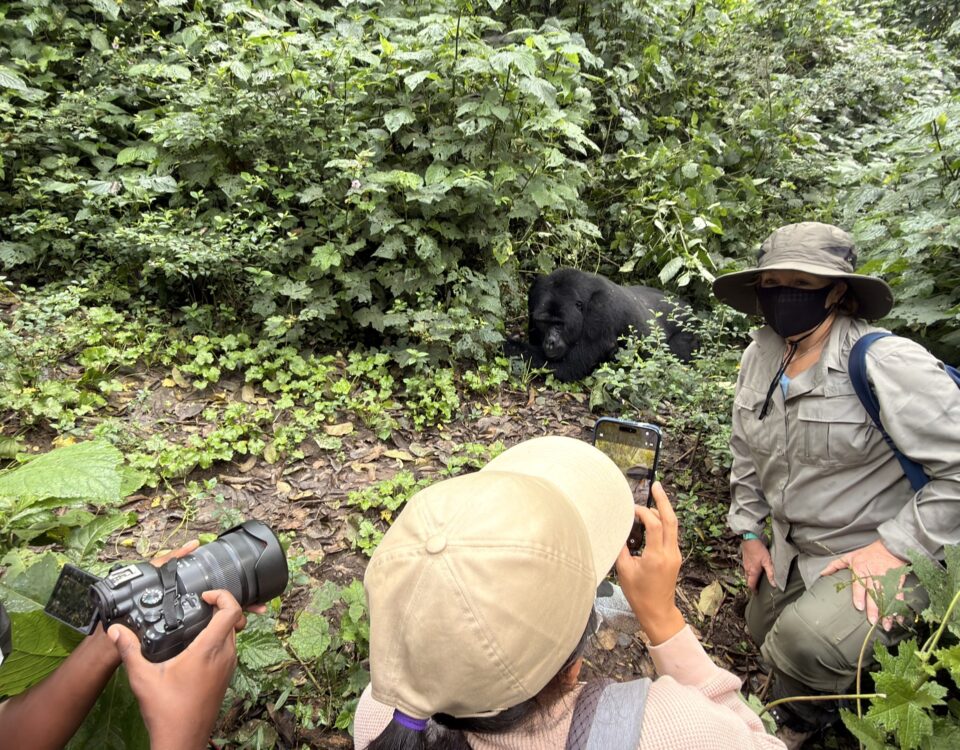
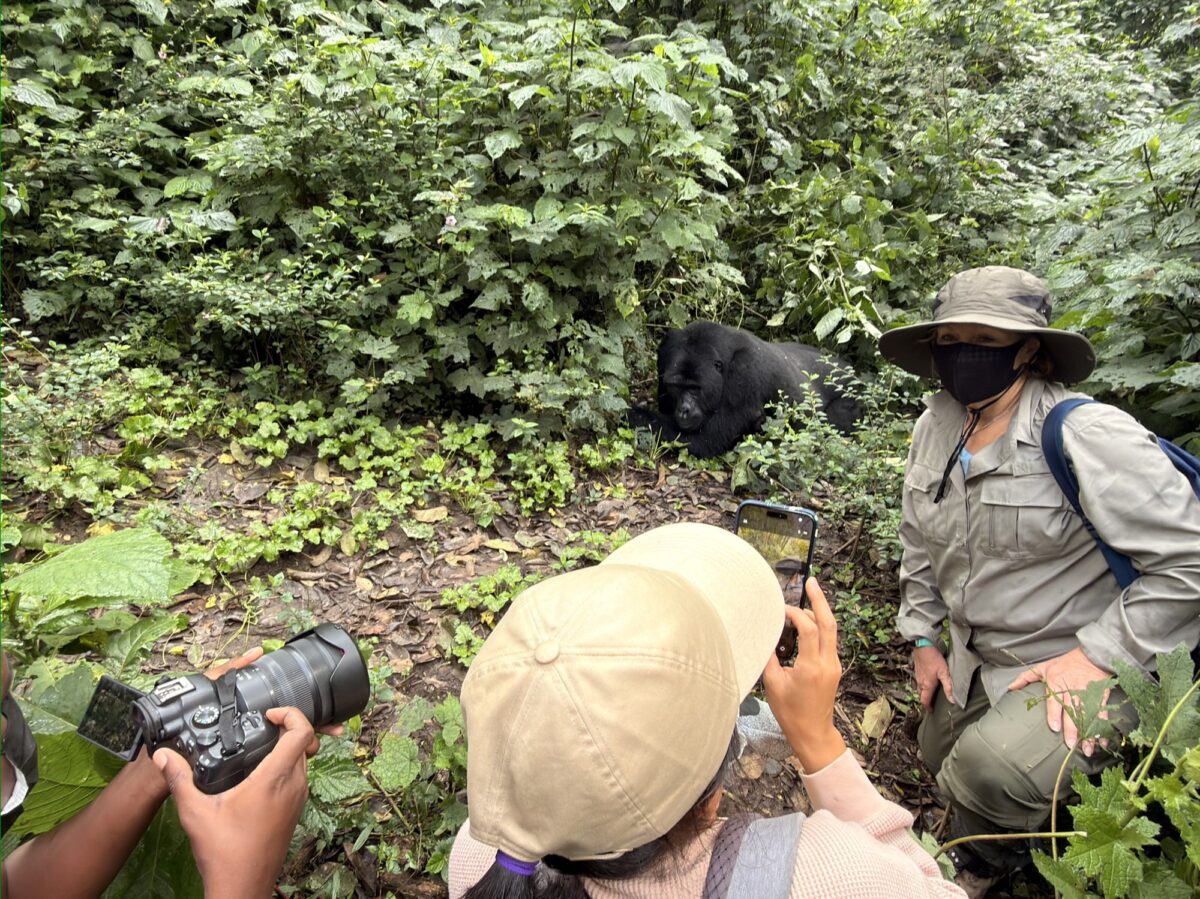
Mask-wearing wasn’t always part of gorilla trekking. Before COVID-19, the main rule protecting mountain gorillas was distance — trekkers had to stay several meters back, but masks weren’t required. That changed with the pandemic. Once it became clear how easily respiratory viruses move between humans and great apes, mask-wearing stopped being optional and became a permanent rule in both Uganda and Rwanda — not a temporary pandemic measure that quietly disappeared once COVID restrictions elsewhere eased.
It’s a question nearly every first-time trekker asks at some point, usually while packing: do I really need this, or is it just leftover COVID theater? The honest answer is that it’s the opposite — this is one of the rules with the most serious science behind it.
The Real Reason: Gorillas Can Catch Our Illnesses, and It Can Be Fatal
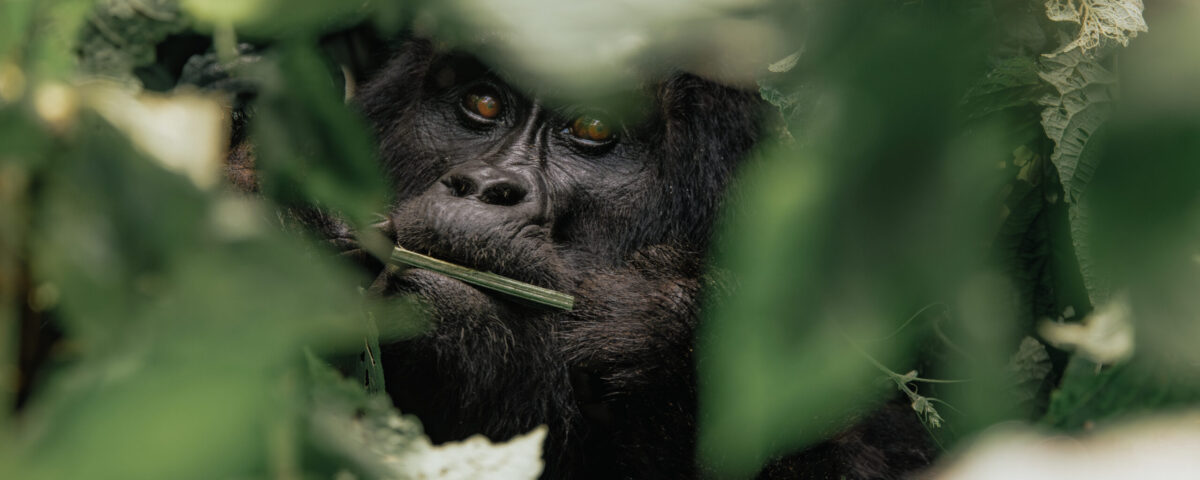
Mountain gorillas share roughly 98% of their DNA with humans, which is exactly why this matters. That genetic closeness means gorillas are vulnerable to many of the same respiratory illnesses we are — a cold or flu that would be a minor inconvenience for a person can turn into a life-threatening illness for a gorilla with no built-up immunity to it.
This isn’t a hypothetical risk. Respiratory disease is the second-leading cause of death in mountain gorillas, responsible for roughly a quarter of all deaths in the population, according to a study published in Scientific Reports that analyzed outbreaks in the Virunga gorilla population between 2004 and 2020. Researchers identified two specific human viruses — human respiratory syncytial virus (RSV) and human metapneumovirus (HMPV) — as confirmed causes of illness in wild gorilla groups.
One documented case makes this concrete: in 2009, Rwanda’s Hirwa gorilla family experienced an HMPV outbreak that sickened 11 of its 12 members and contributed to two deaths. Nearly every tourism-habituated gorilla group in Rwanda has experienced at least one respiratory outbreak since monitoring began in 1990.
The recovery math is sobering too. Researchers modeling outbreak impact estimate that a mild respiratory outbreak (around 4% mortality) takes a gorilla population roughly five years to recover from — and with barely 1,000 mountain gorillas left in the world, even one bad outbreak in one family is a meaningful loss for the entire species, not just that group.
This direction of risk—humans passing illness to gorillas—is well documented. That’s why every protocol on the trail exists: masks, distance, and the rule that sick trekkers aren’t allowed in the forest at all.
The Distance Rule
The primary rule of gorilla trekking across both countries is strictly maintaining distance. Visitors must keep at least 7 meters away from the gorillas in both Uganda and Rwanda. Masks work alongside this distance rule, not instead of it — one doesn’t replace the other, and rangers enforce both. That distance helps prevent disease transmission
What Mask Is Actually Required?
In practice, the parks aren’t strict about the exact type of mask you show up with — a disposable surgical mask is the standard recommendation, since it offers real filtration without being heavy or difficult to trek in. If you forget yours, both Ugandan and Rwandan park headquarters typically have masks available for a small fee, so it isn’t a reason to worry your trek is at risk. That said, we always recommend packing a couple of your own before you travel, just so you’re not relying on availability at the trailhead on the morning of your trek.
What Actually Happens on the Trail
This is the part most articles skip, and it’s usually what surprises first-time trekkers most: you don’t wear the mask for the entire hike.
Trekking to reach a gorilla family can take anywhere from thirty minutes to several hours, and wearing a mask through all of that — sweating, climbing, pushing through undergrowth — would be miserable for no real benefit, since the risk only matters once you’re actually near the gorillas. So keep it somewhere easy to reach, like a jacket pocket, and forget about it for most of the walk.
Your guide will tell you exactly when to put it on, and that moment is one of the best signals of the entire trek: it means the trackers have found the family, and you’re close. From that point, the mask stays on until you’ve moved back away from the group at the end of your hour.
If You’re Sick Before Your Trek
If you show symptoms of a cold, flu, or any contagious illness on the morning of your trek, tell your guide immediately. A single sick trekker can really put an entire gorilla family at risk.
If park officials declare you unfit to track due to illness, UWA may give you a 50% refund if you have already arrived at the park.
Why This Rule Isn’t Going Anywhere
It’s worth being clear about this, because plenty of outdated articles still frame mask-wearing as a pandemic-era rule that’s fading out along with everything else COVID-related. It isn’t. The underlying risk — humans carrying respiratory illness into a population of gorillas with no immunity to it — existed long before COVID and hasn’t gone anywhere since. Conservation bodies had recommended masking as best practice for great ape tourism even before the pandemic; COVID is simply what turned that recommendation into an enforced rule.
Frequently Asked Questions
Is this the same in both Uganda and Rwanda? Yes — both countries require masks during the gorilla encounter itself, for the same reason. The specific distance requirement differs slightly by country (see above), but the mask rule and the reasoning behind it are shared.
Can I take photos while wearing the mask? Yes, and you should — just remember flash photography is separately prohibited, regardless of the mask.
Do the gorillas get used to seeing masked visitors? Habituated gorilla families are used to human presence generally, including masked trekkers, since this has been standard practice at every visit for several years now.
What if my mask fogs up my glasses or gets uncomfortable during the hour? It’s a genuinely common complaint, but not a reason to remove it — bring a cloth to wipe your glasses if needed, and treat the discomfort as a small trade-off for an hour that most people describe as one of the best of their lives.
Ready to Plan Your Gorilla Trek?
Understanding the rules is one part of preparing for this experience — the other is making sure the rest of your trip is planned around it properly. If you have questions about what to expect on your trek, send us an enquiry, and our team will help you plan a trip that’s ready for all of it.
[Send us an enquiry →] or WhatsApp us directly: +256 742 111 959
To provide the best experiences, we use technologies like cookies to store and/or access device information. Consenting to these technologies will allow us to process data such as browsing behavior or unique IDs on this site. Not consenting or withdrawing consent, may adversely affect certain features and functions.
Functional Always active
The technical storage or access is strictly necessary for the legitimate purpose of enabling the use of a specific service explicitly requested by the subscriber or user, or for the sole purpose of carrying out the transmission of a communication over an electronic communications network.
Preferences
The technical storage or access is necessary for the legitimate purpose of storing preferences that are not requested by the subscriber or user.
Statistics
The technical storage or access that is used exclusively for statistical purposes.The technical storage or access that is used exclusively for anonymous statistical purposes. Without a subpoena, voluntary compliance on the part of your Internet Service Provider, or additional records from a third party, information stored or retrieved for this purpose alone cannot usually be used to identify you.
Marketing
The technical storage or access is required to create user profiles to send advertising, or to track the user on a website or across several websites for similar marketing purposes.