

The Great Migration 2026: Predicting the Mara River crossing
February 9, 2026
Safari & Wellness: The Best Wilderness Spas in Uganda and Rwanda
February 10, 2026
Your Ideal Post-Safari Island Escape

Diani Beach vs. Zanzibar at a glance
Crossing Borders & Flight Logistics
Diani Beach (Kenya Coast)
- Entry Formalities: All foreign visitors must obtain an Electronic Travel Authorisation (eTA) online at etakenya.go.ke before travel.
- Fees & Processing: Standard processing (up to 72 hours) starts at $30 USD. Expedited (immediate processing) is available for an additional $100 USD.
Zanzibar (Tanzania)
- Mandatory Inbound Insurance: All foreign visitors must purchase local inbound travel insurance ($44 USD per adult via visitzanzibar.go.tz) before arrival; it is valid for up to 92 days.
Transit Factor: How Getting There Compares
- Diani Beach (Seamless & Fast):
- Zanzibar ( Scenic, but Extra Steps):
The Beaches and Sea: Tides, Sand and Atmosphere
Diani: Diani offers deep, powder-white sand framed by lush coastal forest, where low-rise resorts give the entire 17-kilometer stretch a spacious, relaxed feel. Protected by an outer barrier reef, its shallow turquoise lagoon remains calm and easily swimmable throughout the day.
Zanzibar features brilliant, fine coral sand and vivid shades of blue. Still, ocean access varies by coast—the northern beaches of Nungwi and Kendwa allow for all-day swimming, while the east coast experiences dramatic low tides that recede for hundreds of meters. Resort styles on the island range from beachfront spots in the north to quiet eco-lodges along the east. Local beach vendors operate in both places; while they are more active in Zanzibar’s busiest hubs, a firm, polite “no thank you” is widely respected along both shorelines.
Things to Do at Both Destinations
- Kisite-Mpunguti & Wasini Island: Cruise on a traditional dhow to snorkel with sea turtles and wild dolphins.
- Kitesurfing at Galu Beach: Take lessons or hire gear to ride consistent coastal trade winds.
- Colobus Conservation Sanctuary: Guided eco-tour learning about endangered Angolan colobus monkeys.
- Kongo River Mangrove Canoe Tour: Ride a hand-carved canoe down the quiet Kongo River estuary at sunset, where freshwater meets the ocean.
- Ali Barbour’s Cave Restaurant: Eat fresh seafood inside a natural coral cavern under open stars.
- Stone Town Walking Tour: Walk through historic coral-rag alleys and sample local street food at sunset.
- Mnemba Atoll Snorkeling: Boat trip to a protected marine reserve off the northeast coast for turtle and reef fish sightings.
- Swahili Home Cooking Class with Mamas of Zanzibar: Visit a local family home or kitchen alongside local Zanzibari women (Mamas of Zanzibar). Shop at Darajani Market, grind fresh spices, grate coconut, and cook traditional Swahili dishes like pilau and coconut curry over charcoal.
- Safari Blue Dhow Cruise: Board a wooden dhow in Menai Bay. Sail past mangrove lagoons, snorkel marine reefs, and feast on a beach seafood barbecue.
- Forodhani Gardens Night Food Market: Eat street food at Stone Town’s oceanfront park at sunset. Sample Swahili snacks, grilled octopus, and fresh sugarcane juice.
Bush-to-Beach Flow & Safari Planning
- Always Safari First, Beach Second: Always start with high-energy game drives and savannah dusty roads. Save Diani or Zanzibar for the end to truly unwind.

- Bush Plane Luggage Limits: Strictly pack under 15 kg (33 lbs) per person in soft-sided duffel bags to fit into light aircraft holds.
- Buffer Night: Avoid booking an international flight home on the same afternoon you fly out of a remote bush airstrip—build in a buffer night or select a late-night flight to account for weather delays.
Coast Seasonality & Weather
Understanding how monsoon winds, seasonal rains, and tidal patterns interact will help you pick the exact right window for your beach stay.
- The Dry Windows ( Best Overall Beach Weather)
-
June – October (Cooler, Dry & Breezy): The primary dry season across both coasts.(~ 28°C / 82°F) with low humidity and clear skies.
-
December – February (Hot, Sunny & Calm): Warmer weather (31–33°C / 88–91°F) and glassier, calmer seas—ideal for swimming, diving, and boat trips.
2. Monsoon Winds & Kitesurfing
-
The Kusi Wind (June – September): Blowing steadily from the southeast, this wind brings active waves. It makes Paje (Zanzibar) and Galu Beach (Diani) premier kitesurfing hubs, though outer reef trips get choppier.
-
The Kaskazi Wind (December – March): A gentler, warmer breeze from the northeast that flattens coastal waters for snorkeling and paddleboarding.
3. Tides, Seaweed, & Swimming Conditions
-
Diani Beach: An outer barrier reef absorbs swells, keeping the inner lagoon calm with reliable all-day swimming. Minor seasonal seaweed is regularly cleared by resorts.
-
Zanzibar: Swimming depends on the coast. The East Coast (Paje, Jambiani) sees dramatic tides where the ocean recedes up to a kilometer, exposing sand flats and seaweed farms. The North Coast (Nungwi, Kendwa) has deeper waters allowing non-stop, all-day swimming.
4. Rains & Closures
-
April – May (Long Rains): Heavy rainfall and high humidity; some eco-lodges close for annual maintenance.
-
November – Early December (Short Rains): Brief showers that clear quickly without disrupting travel plans.
Cost Comparison
- Diani Beach: Generally more budget-friendly for Uganda post-safari connections due to direct domestic bush flights to Ukunda and standard $30 eTA entry fees.
- Zanzibar: Higher overall transit costs for Kenya/Uganda safari circuits due to international flights, separate Tanzania eVisas ($50–$100), and mandatory $44 Zanzibar travel insurance. Local dining and accommodation options range from affordable street food in Stone Town to ultra-luxury private island resorts.
Which should you choose?
- Choose Diani Beach if: You want a seamless finish. You step off your bush plane onto Ukunda tarmac, skip the extra immigration queues, and within a few minutes, you are barefoot on the sand with a cold drink in hand. The barrier reef keeps the water calm and swimmable throughout the day, making it the most seamless and budget-smart choice.
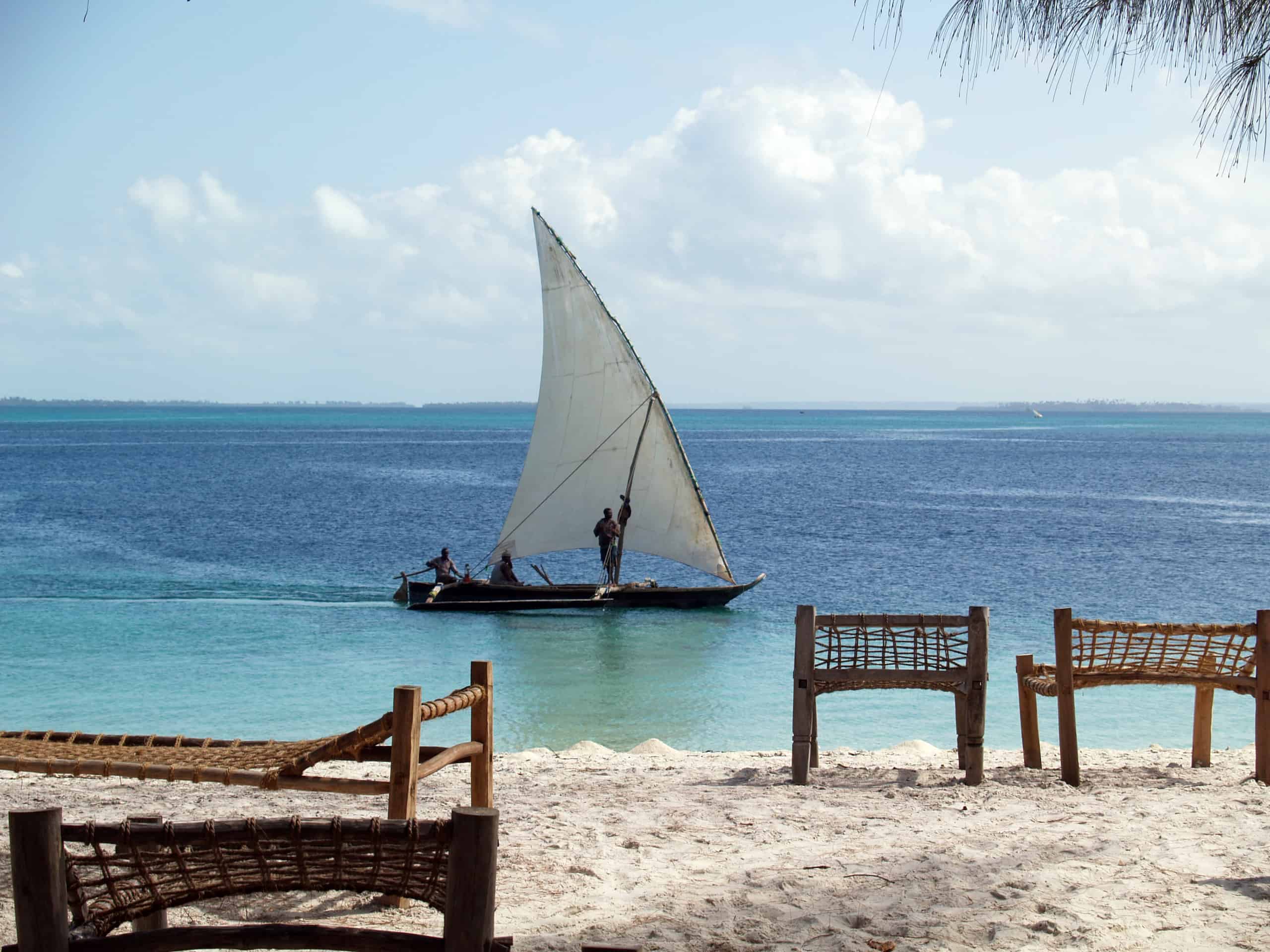
- Choose Zanzibar if: You are chasing that classic spice island romance. There is an undeniable magic to getting lost in Stone Town’s carved wooden door alleys, breathing in fresh spices on a farm tour, and watching wooden dhows catch the sunset breeze. It is the natural finale to a Tanzanian safari, as long as you are happy navigating an extra border, picking up mandatory local insurance, and planning around the dramatic east-coast tide shifts.
- Consider both if you have two weeks or more and want the full East African coast experience. Pairing a Ugandan safari with a relaxed beach interlude in Diani, then heading across to Zanzibar for a few days of history and culture gives you an incredible contrast—just budget for the cross-border flights and entry formalities between these countries.
Frequently Asked Questions (FAQs)
Is Zanzibar more expensive than Diani?
Can I visit both Diani and Zanzibar in one trip?
What are the tide differences between Diani and Zanzibar?
- Diani is protected by an outer barrier reef, which creates a calm shallow lagoon that allows for relatively consistent swimming throughout the day.
- Zanzibar: Features dramatic tidal swings along the East Coast, where the sea recedes for hundreds of meters at low tide. For non-tidal, all-day swimming, stay on the northern tip in Nungwi or Kendwa.
Do I need malaria medication for Diani and Zanzibar?
What is the dress code in Stone Town vs. beach resorts?
In Zanzibar, dress modestly (cover shoulders and knees) outside private resorts to respect Swahili tradition. Diani is casual along the beach, but modest attire is recommended when visiting local towns.